
Your septic tank is working underground every single day. Most homeowners never think about it until something goes wrong.
The truth is, septic tanks need to be emptied regularly. Skipping this is one of the most expensive mistakes a homeowner can make.
This guide explains exactly how septic tank emptying works, when to have it done, what to expect, and how to know if something is wrong.
What Does Emptying a Septic Tank Actually Mean?
When people say “empty a septic tank,” they usually mean pumping. A vacuum truck removes the accumulated sludge and scum from inside the tank.
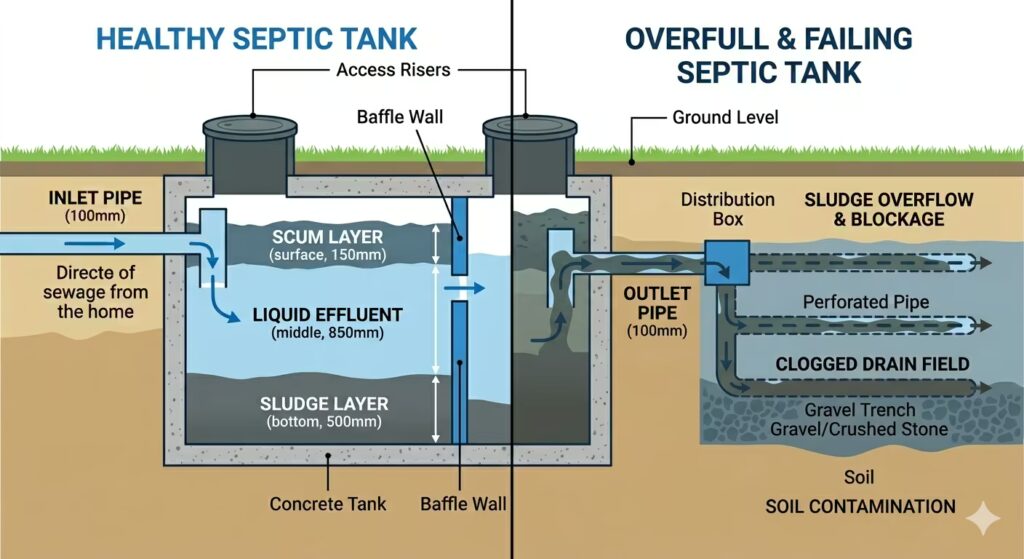
Over time, solids settle at the bottom of your tank as sludge. Grease and lighter waste float to the top as scum. The liquid in the middle flows out to the drain field.
If sludge and scum are not removed regularly, they overflow into the drain field. That causes blockages, backups, and very costly repairs.
How Often Should You Empty Your Septic Tank?
Most households need their septic tank pumped every 3 to 5 years. The exact schedule depends on your tank size and the number of people living in your home.
A smaller tank with more occupants fills up faster. A large tank with one or two people may go longer between pumpings.
Use this general guide as a starting point:
| Tank Size | Household Size | Pump Every |
| 1,000 gallons | 1 to 2 people | Every 5 years |
| 1,000 gallons | 3 to 4 people | Every 3 years |
| 1,500 gallons | 1 to 2 people | Every 7 years |
| 1,500 gallons | 3 to 4 people | Every 4 to 5 years |
| 2,000 gallons | 4 to 6 people | Every 5 to 6 years |
Not sure when your tank was last pumped? Check with your local health department. Many counties keep records of septic service visits.
| TOOL: Check Your Pumping Schedule |
|---|
| Use the Septic System Maintenance section of our Smart Home Plumbing Checklist to track your last pump date and set a reminder for the next one. It takes less than two minutes. |
Signs Your Septic Tank Needs Emptying Now
Do not wait for the calendar to show warning signs if your tank is showing warning signs. Some of these signals mean the tank is already past due.
- Slow drains throughout the house, not just one fixture
- Gurgling sounds coming from toilets or drains
- Sewage odors inside the house or outside near the tank
- Unusually green or spongy grass above the drain field
- Water is pooling on the ground near the septic tank area
- Sewage backing up into sinks, toilets, or bathtubs
Any one of these signs is reason enough to call a septic pumping service. Do not delay, as ignoring these signals leads to drain field damage.
| IMPORTANT: Sewage Backup Is an Emergency |
|---|
| If sewage is backing up into your home, stop using all water immediately. Do not run the dishwasher, washing machine, or any faucets. Call a septic professional the same day. |
What Happens During a Septic Tank Pumping
Understanding the process helps you know what to expect and how to prepare. Here is what a typical septic pumping visit looks like.
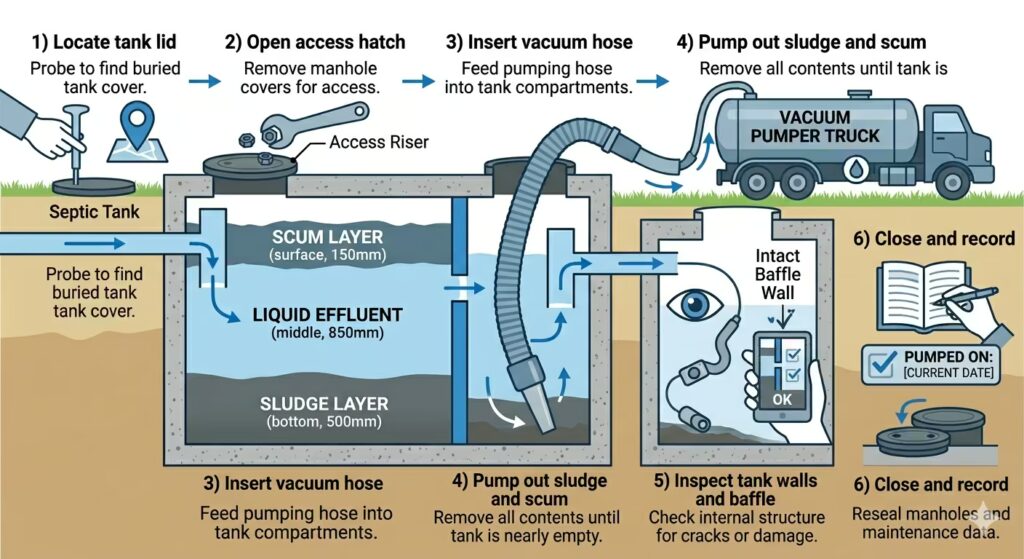
- The technician locates your septic tank lid and, if needed, digs it up.
- They open the access hatch and lower a vacuum hose into the tank.
- A truck-mounted pump removes all the sludge, scum, and liquid.
- The technician inspects the tank walls, inlet baffle, and outlet baffle.
- They check for cracks, leaks, or signs of structural damage.
- The lid is replaced, and the service is recorded.
A standard pumping job takes between 30 minutes and 2 hours. Larger tanks or tanks with heavy buildup take longer.
The technician should always show you the tank before and after. Ask them about the condition of the baffles and whether they saw any cracks.
Can You Empty a Septic Tank Yourself?
The short answer is no. Pumping a septic tank requires a licensed vacuum truck and proper waste disposal.
Raw sewage is a biohazard. It cannot be dumped on your property or into a regular drain. Certified septic companies are licensed to transport and dispose of it safely.
What you can do yourself is maintain the system between pumpings. This includes being careful about what goes down your drains and toilets.
| RELATED: What Not to Flush If You Have a Septic Tank |
|---|
| The wrong items going down your drains significantly speed up sludge buildup. Read our guide on what is safe and what is not for septic systems. |
How to Find a Septic Pumping Service
Look for a licensed septic company in your county. Most states require septic pumpers to be certified and registered.
Ask these questions before you book:
- Are you licensed and insured in this state?
- Do you inspect the tank and baffles during the pump?
- Will you provide a written service record?
- How do you dispose of the waste?
Avoid companies that cannot answer these questions clearly. A good septic service will provide a detailed receipt that includes the date, tank condition, and volume pumped.
Keep this record somewhere safe. You will need it if you ever sell your home, and it helps you track the right pumping schedule.
How Much Does Septic Tank Emptying Cost?
Septic pumping typically costs between $300 and $600 for a standard residential tank. Prices vary by location, tank size, and access difficulty.
Extra costs can apply if your tank lid is buried deep, if the tank is unusually large, or if emergency service is needed outside business hours.
Paying for regular pumping every few years is far cheaper than repairing or replacing a failed drain field, which can cost $5,000 to $25,000 or more.

After the Pump: How to Keep Your Tank Healthy
Emptying the tank is just one part of good septic maintenance. What you do between pumpings matters just as much.
Be careful what you flush
Wipes, even those labeled flushable, do not break down in a septic tank. Cotton balls, feminine hygiene products, and paper towels should never be flushed.
Even certain toilet paper brands cause problems. Thicker, quilted paper breaks down more slowly in septic systems.
| RELATED: Best Toilet Paper for Septic Systems |
|---|
| Not all toilet paper is septic-safe. Read our guide to find out which brands dissolve quickly and which ones cause buildup. |
Watch what goes down the kitchen drain
Grease and cooking oils thicken the scum layer rapidly. Pour used cooking fat into a container and throw it in the trash.
Garbage disposals send large amounts of food solids into the tank. If you have a septic system, use your disposal sparingly.
Use septic-safe cleaning products
Bleach and antibacterial cleaners kill the bacteria that break down waste in your tank. Use these products in small amounts.
Look for cleaning products labeled septic-safe. These are formulated to avoid disrupting the tank’s bacterial balance.
Protect your drain field
Never park vehicles or place heavy objects over the drain field. Compaction crushes the pipes and destroys the soil structure.
Keep trees and shrubs at least 10 feet away from the drain field. Roots are one of the leading causes of septic system damage.
Frequently Asked Questions
How do I know where my septic tank is?
Check your property’s as-built drawings or call your local health department. They often have records of septic tank locations.
You can also look for a slightly raised or depressed area in the yard, or a visible clean-out pipe near the house foundation.
Can I use additives to reduce the frequency of pumping?
Most septic additives are not necessary if your system is healthy. A well-functioning tank already contains the bacteria it needs.
Some additives can actually disrupt the bacterial balance. Stick to regular pumping and careful flushing habits instead.
What if the technician says my tank is fine and does not need pumping?
Ask them to document this in writing. A reputable technician will tell you honestly if the sludge level is still low.
Some companies charge for a pump regardless. Getting a written inspection report protects you from unnecessary service.
Is it normal to smell sewage after pumping?
A brief odor immediately after pumping is normal. The tank has been opened, and the gases need to settle.
If the smell persists for more than a day or two indoors, there may be a venting issue. Call your septic technician to investigate.
Quick Summary
| Question | Answer |
| How often to pump? | Every 3 to 5 years for most homes |
| Can you DIY a pump? | No. Requires a licensed vacuum truck |
| Typical cost? | $300 to $600 for a standard tank |
| Biggest warning sign? | Sewage backup or pooling near the tank |
| Best prevention? | Regular pumping and careful flushing habits |
The Bottom Line
Your septic tank does a quiet, essential job every day. Emptying it on schedule is the single most important thing you can do to protect it.
Budget for a pump every 3 to 5 years, watch for the warning signs, and be careful about what you put down your drains.
A small investment in routine maintenance keeps a much larger repair bill off your future.