
A toilet bowl ring is one of those problems that seems simple until you realize the usual tricks don’t work. That is almost always because you are treating the wrong type of ring.
The color of the ring tells you exactly what caused it — and different causes need different solutions. Scrubbing a hard water ring with a brush does almost nothing. Using the wrong cleaner on a mold ring can worsen it.
This guide covers every ring color, its specific cause, the most effective fix for each, and which products are genuinely worth buying to get the job done without scrubbing yourself sore.
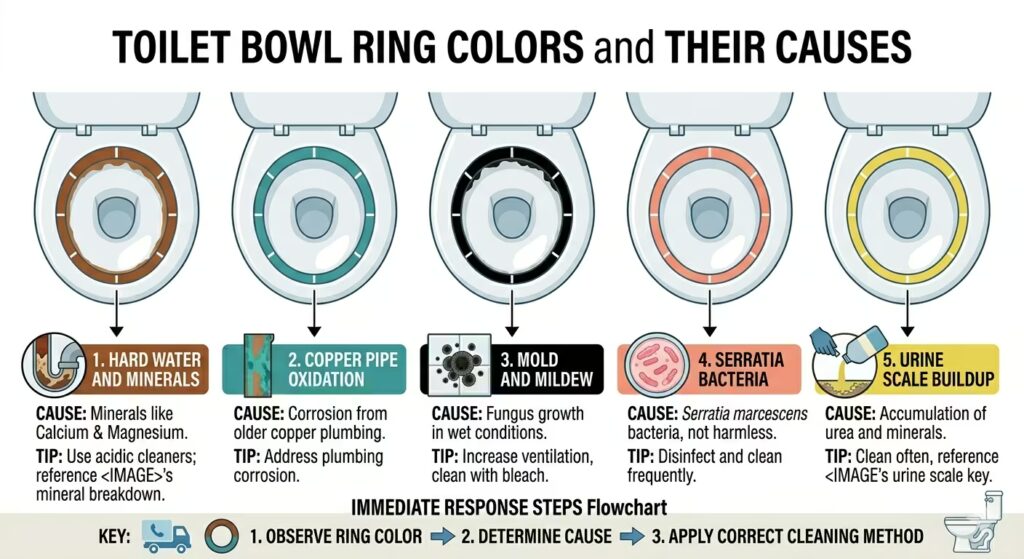
Step One: Identify Your Ring Color
Before reaching for any cleaner, look at the ring carefully. The color is the most reliable diagnostic tool you have.
| Ring Color | Cause | Best Fix |
| Brown or rust | Hard water minerals (iron, calcium) | Acid-based cleaner or pumice stone |
| Blue or blue-green | Copper pipe oxidation or hard water | White vinegar soak or CLR |
| Black | Mold or mildew growth | Bleach-based cleaner or borax |
| Pink or orange | Serratia marcescens bacteria | Disinfectant cleaner plus prevention habit |
| Yellow | Urine scale or mineral buildup | Acid-based cleaner or enzyme cleaner |
| Green | Algae or mineral deposits | Bleach or vinegar, depending on the cause |
Brown or Rust Ring: Hard Water Minerals
This is the most common toilet bowl ring in the United States. Brown and rust-colored rings are caused by iron and calcium minerals dissolved in hard water. When water sits at the waterline, minerals deposit onto the porcelain surface and harden over time.
The longer the buildup goes untreated, the harder it becomes to remove. A fresh mineral ring comes off with mild acid. One that has been building for months or years may need a stronger approach.
Method 1: White vinegar soak — for fresh or mild rings
- Pour two cups of undiluted white vinegar directly into the toilet bowl.
- Let it soak for at least 30 minutes. For heavier buildup, leave overnight.
- Scrub with a toilet brush, focusing on the ring line.
- Flush to rinse. Repeat if needed.
Method 2: Pumice stone — for stubborn mineral rings
A wet pumice stone is the most effective manual tool for hard mineral rings. It is abrasive enough to remove the deposit but soft enough not to scratch glazed porcelain when used wet.
- Wet the pumice stone thoroughly before use. Never use a dry pumice stone on porcelain.
- Rub the stone gently back and forth over the ring using light, even pressure.
- Keep both the stone and the surface wet throughout. The pumice wears down as you use it — this is normal.
- Flush to rinse away the residue.
| PRODUCT PICK: Pumie Toilet Bowl Ring Remover >> Check Price on Amazon |
|---|
| Why it works: The original pumice-on-a-stick is specifically designed for toilet bowls. The handle keeps your hands away from the water, and the pumice block is sized to reach under the rim. Widely recommended by plumbers and cleaning professionals for mineral and rust rings that do not respond to liquid cleaners. Best for: Stubborn brown, rust, and calcium rings that have resisted liquid cleaners. Safe on glazed porcelain when used wet. |
Method 3: CLR or acid-based cleaner — for heavy buildup
Calcium, Lime, and Rust Remover (CLR) and similar acid-based cleaners dissolve mineral deposits chemically without scrubbing. They work faster than vinegar on heavy buildup.
- Apply the cleaner directly to the ring, or soak paper towels in the cleaner and press them against the ring to hold contact.
- Leave for the time specified on the product label — usually 2 to 10 minutes.
- Scrub lightly with a toilet brush and flush.
| Do not mix acid-based cleaners with bleach |
|---|
| Mixing CLR or vinegar with bleach creates toxic chlorine gas. Use one or the other, never both. Flush thoroughly between any product changes. |
| PRODUCT PICK: CLR PRO Calcium, Lime and Rust Remover |
|---|
| Why it works: A trusted acid-based cleaner that dissolves calcium, lime, and rust deposits without harsh scrubbing. Works on contact with mineral scale and rinses clean. Effective for toilets, sinks, and showerheads. Best for: Heavy brown rust rings and calcium scale that have built up over months, especially in hard water areas. |
Blue or Blue-Green Ring: Copper Oxidation
A blue or blue-green ring at the waterline is almost always caused by copper leaching from older copper pipes. When slightly acidic water flows through aging copper plumbing, it picks up trace amounts of copper. That copper oxidizes on contact with air at the waterline, leaving a distinctive blue-green stain.
This ring type does not indicate a dirty toilet — it indicates an aging plumbing system. It is harmless but persistent if not treated correctly.
The fix
- Pour two cups of white vinegar into the bowl and let it soak for one to two hours. The acid in the vinegar dissolves the copper oxidation.
- Alternatively, apply a paste of cream of tartar and white vinegar directly to the ring and let it sit for 30 minutes.
- Scrub with a soft brush and flush.
If the blue-green ring returns within days of cleaning, the root cause is the plumbing. A plumber can test your water for copper content and assess whether pipe corrosion needs addressing.
Black Ring: Mold and Mildew
A black ring in the toilet bowl is mold or mildew growth. Mold thrives in the damp, dark environment inside the toilet bowl, particularly under the rim where cleaning is difficult.
Black mold in a toilet bowl is not the dangerous black mold associated with structural damage — it is a common household mold that forms wherever moisture and organic material combine. It is unpleasant but straightforward to remove.
Method 1: Bleach — fastest and most effective
- Pour half a cup of household bleach into the toilet bowl.
- Let it sit for 10 minutes without flushing.
- Scrub the ring and under the rim with a toilet brush.
- Flush to rinse. The mold should be fully gone after one treatment.
| If you have a septic system |
|---|
| Use bleach sparingly. A single cleaning treatment is fine for a septic system. For regular mold prevention, use a hydrogen peroxide-based cleaner instead of bleach to protect your tank’s bacterial balance. Read our guide on whether bleach is safe for septic tanks for the full picture. |
Method 2: Borax paste — for mold under the rim
- Mix half a cup of borax with enough white vinegar to form a thick paste.
- Apply the paste under the rim and on the visible ring using a brush or cloth.
- Leave for 20 to 30 minutes.
- Scrub and flush. Borax is particularly effective at killing mold spores and preventing regrowth.
| PRODUCT PICK: Lysol Bleach-Free Hydrogen Peroxide Toilet Bowl Cleaner |
|---|
| Why it works: A bleach-free disinfectant toilet cleaner that kills 99.9 percent of bacteria and mold without harming septic systems. The angled bottle reaches under the rim where mold typically grows first. Leaves a clean scent without the harsh fumes of bleach-based cleaners. Best for: Black mold and mildew rings, especially in households with septic systems where regular bleach use is a concern. |
Pink or Orange Ring: Serratia Bacteria
A pink or pinkish-orange ring is not a stain in the traditional sense. It is a living colony of Serratia marcescens, an airborne bacterium that thrives in moist bathroom environments.
This bacteria is naturally present in the air and settles on damp surfaces. It forms a pinkish biofilm wherever moisture sits consistently — toilet bowls, showerheads, and shower curtains are its favorite locations.
It is not dangerous to healthy adults, but it is persistent. Cleaning removes it temporarily, but it returns quickly unless you address the conditions that let it grow.
The fix
- Apply a disinfectant toilet bowl cleaner and let it sit for 10 minutes.
- Scrub thoroughly, paying attention to the waterline and under the rim.
- Flush and repeat weekly until the pink ring stops returning.
How to stop it coming back
- Flush the toilet daily, even when it has not been used. Stagnant water at the same level allows bacteria to establish themselves more quickly.
- After cleaning, dry the inside of the bowl with a cloth to remove the moisture film that bacteria need.
- Improve bathroom ventilation. A bathroom fan running during and after showers significantly reduces the airborne bacteria count.
- Use a toilet bowl cleaner tablet in the cistern. The continuous release of disinfectant keeps the water treated between cleanings.
| PRODUCT PICK: ACTIVE Automatic Toilet Bowl Cleaner |
|---|
| Why it works: A long-lasting cistern tablet that releases antimicrobial agents with every flush for up to 4 months. Particularly effective at preventing pink Serratia bacteria rings, which return quickly after cleaning without an ongoing preventive measure. Safe for most plumbing. Best for: Pink or orange recurring rings caused by Serratia bacteria. Best used as a prevention tool after the initial ring has been removed. |
Yellow Ring: Urine Scale and Mineral Buildup
A yellow ring is usually caused by urine scale — a buildup of uric acid crystals that deposit at and below the waterline over time. It can also be mineral-related in very hard-water areas, where the mineral content itself has a yellow tint.
Urine scale is tougher than a simple stain because uric acid crystals bond chemically to the porcelain surface. Standard toilet cleaners dissolve it slowly. Enzyme-based or acid-based cleaners work significantly faster.
The fix
- Apply an enzyme-based toilet cleaner or a uric acid-specific remover directly to the ring.
- For heavy buildup, pour undiluted white vinegar into the bowl and add a cup of baking soda. Let it fizz and soak for one hour.
- Scrub with a stiff toilet brush.
- Flush and repeat if the ring has not fully cleared.
| PRODUCT PICK: Instant Power 1806 Toilet Bowl Restorer |
|---|
| Why it works: A strong acid-based toilet bowl restorer that removes uric scale, calcium, rust, and mineral deposits on contact. Designed for toilets with heavy buildup that has developed over months or years. One of the highest-rated toilet ring removers on Amazon for cases where standard cleaners have failed. Best for: Yellow urine scale rings, heavy mineral buildup, and toilets that have not been cleaned regularly and have significant staining. |
The Right Tools Make All the Difference
The cleaning product matters, but the tool you use it with often determines whether the job gets done in five minutes or thirty.
Toilet brush — the everyday essential
A good toilet brush should have stiff bristles that reach under the rim and a head size that fits inside the bowl without leaving gaps. Silicone brushes look modern but are less effective at removing mineral deposits than traditional nylon-bristle brushes.
| PRODUCT PICK: OXO Good Grips Toilet Brush with Rim Cleaner |
|---|
| Why it works: A well-designed brush with angled bristles that reach under the rim and a built-in rim cleaner attachment for the hard-to-reach spots where mold and mineral deposits start. The covered holder keeps the brush hygienic between uses. Best for: Everyday toilet cleaning and light ring maintenance. The rim attachment makes it better than most standard brushes for preventing ring formation. |
Pumice stone with handle — for mineral and rust rings
Already covered in the hard water section above, but worth emphasizing: a pumice stone is the single most effective manual tool for mineral rings that have resisted liquid cleaners. No liquid product removes a thick calcium ring faster than a wet pumice stone.
Under-rim cleaning brush — for the hidden buildup zone
Most toilet rings start under the rim before they become visible at the waterline. A flexible under-rim brush or a curved cleaning tool reaches the hidden area where mineral deposits, mold, and bacteria first establish.
| PRODUCT PICK: Clorox ToiletWand Disposable Toilet Cleaning System |
|---|
| Why it works: A disposable wand system with pre-loaded cleaning pads that dissolve in the flush. The curved wand reaches under the rim easily without the mess of a traditional brush. Each pad is pre-loaded with Clorox cleaner. Particularly useful for renters or situations where brush storage is inconvenient. Best for: Under-rim cleaning, light ring prevention, and households that prefer a disposable, no-mess cleaning solution. |
How to Prevent Toilet Bowl Rings From Forming
Prevention is significantly easier than removal. A few consistent habits keep most toilet bowl rings from forming in the first place.
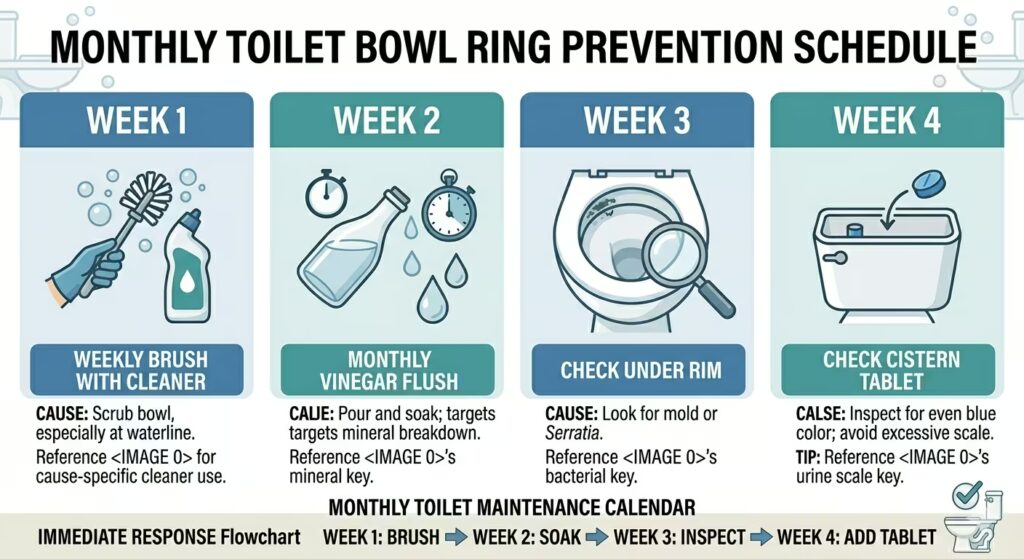
Clean weekly without skipping
A toilet cleaned once a week with any standard toilet bowl cleaner never develops a ring that requires serious effort. Minerals and bacteria need time to bond and build up. Weekly cleaning removes them before they get the chance.
Use a cistern tablet for continuous protection
A toilet bowl cleaner tablet in the cistern releases a small amount of cleaning agent with every flush. This keeps the bowl treated between manual cleaning sessions and significantly reduces mineral and bacterial buildup.
Note: Avoid dye-based blue tablets if you have a septic system. Choose antibacterial or enzyme-based tablets instead.
Do a monthly vinegar flush
Once a month, pour two cups of white vinegar into the bowl before bed and leave it overnight. Flush in the morning. This dissolves any early-stage mineral deposits before they harden into a visible ring.
Address hard water at the source
If brown or blue-green rings keep returning within a few weeks of cleaning, the root cause is your water supply. Hard water with high mineral content will always produce rings faster than normal water.
A whole-house water softener eliminates the mineral content that causes these rings. It is a significant investment, but it solves the problem permanently rather than treating the symptom.
A less expensive option is a toilet-specific in-cistern mineral neutralizer tablet, which reduces mineral deposits without treating the entire water supply.
| PRODUCT PICK: Iron OUT Automatic Toilet Bowl Cleaner |
|---|
| Why it works: A specialty in-cistern tablet that specifically targets iron and rust stains — the primary cause of brown toilet bowl rings. Releases iron-removing agents with every flush for up to 45 days. Particularly effective in homes with well water or high-iron municipal supplies where standard cleaners struggle to keep up. Best for: Brown and rust rings caused by iron-rich water, especially in rural homes on well water that experience rapid ring formation. |
Common Methods That Do Not Work as Well as Advertised
A few widely suggested approaches are less effective than people expect. Knowing what to skip saves you time.
Coca-Cola
Coca-Cola is frequently cited as a toilet ring remover. The phosphoric acid in it is mildly effective on light mineral deposits. It is not, however, more effective than white vinegar, which costs a fraction of the price and has a higher acid content per pour. Use vinegar instead.
Bleach alone on mineral rings
Bleach is excellent for mold and bacteria. It does absolutely nothing to mineral deposits, calcium, or rust. Using bleach on a brown hard-water ring will disinfect the area and leave the ring intact. Match your cleaner to the ring type.
Scrubbing without soaking first
Scrubbing a mineral or urine scale ring without softening it first with an acid-based cleaner or vinegar makes the job significantly harder and risks scratching the porcelain. Always soak first and let the chemistry do the work before the brush.
Frequently Asked Questions
Why does my toilet bowl ring come back so quickly after cleaning?
A ring that returns within days of cleaning almost always means the underlying cause is not being addressed. A hard water ring will return quickly if your water has high mineral content and you are not using a preventive cistern tablet or treating the water.
A pink ring that returns within a week means Serratia bacteria are present in the bathroom air and re-colonizing the bowl. Daily flushing and improved ventilation are the most effective prevention measures.
Is it safe to mix vinegar and baking soda in the toilet?
Yes, this combination is safe. The fizzing reaction between vinegar and baking soda is simply an acid-base reaction that loosens deposits. It is harmless to porcelain, safe for septic systems, and produces no toxic byproducts.
The one thing to avoid is mixing vinegar or any other acid with bleach. That combination produces chlorine gas, which is toxic.
Can a toilet bowl ring damage the toilet?
A ring itself does not damage the toilet. However, heavy mineral buildup around the jets beneath the rim can reduce water flow over time, thereby affecting flush efficiency.
Mold under the rim, if left long enough, can degrade the grout and sealant in older toilets. Regular cleaning prevents both issues.
What is the fastest way to remove a toilet bowl ring?
For mineral and rust rings, a wet pumice stone is the fastest mechanical method. For mold and bacteria, bleach left to soak for 10 minutes clears it in a single treatment.
For rings that have built up over months, a commercial acid-based restorer like Instant Power or CLR combined with a pumice stone produces the fastest results when other methods have failed.
My toilet has rings in multiple colors. What does that mean?
Multiple ring colors mean multiple causes are active at the same time. A brown ring with a pink tinge, for example, indicates that both hard-water minerals and Serratia bacteria are present.
Address each cause separately with its specific treatment. Start with the acid-based cleaner for the mineral ring, then follow up with a disinfectant for the bacterial component. Using one product on both rarely delivers full results.
Match the Treatment to the Ring, and It Comes Off Every Time
Toilet bowl rings look like a cleaning problem, but they are actually a chemistry problem. The right product applied to the right ring type removes it completely. The wrong product on the right ring does almost nothing.
A pumice stone for hard water, bleach for mold, disinfectant for pink bacteria, and an acid-based cleaner for yellow urine scale. Know your ring, choose your tool, and the job is straightforward.
Once the ring is gone, a weekly brush and a monthly vinegar flush are all it takes to keep it that way.