Most people do not think twice about which toilet paper they buy. When you have a septic system, it is a decision that actually matters.
The wrong toilet paper does not break down properly inside your tank. Over time, it contributes to faster sludge buildup and more frequent pump cycles.
This guide explains what to look for, which types dissolve best, and how to make a confident choice at the store.
Why Toilet Paper Matters for Septic Systems
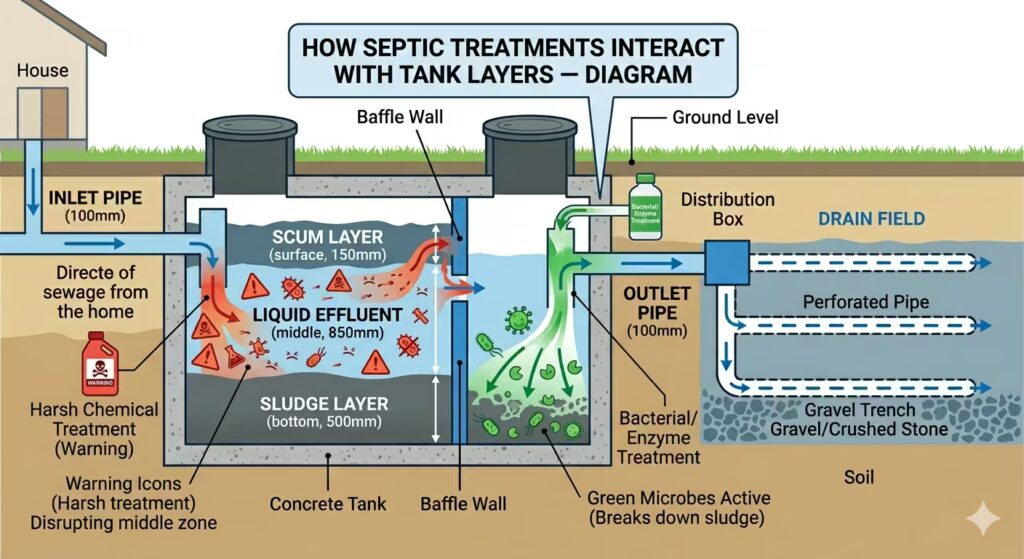
Your septic tank relies on bacteria to break down waste. Toilet paper that dissolves quickly puts less strain on this process.
Paper that stays intact adds to the solid waste layer at the bottom of the tank. A thicker sludge layer means more frequent pumping and a greater risk of overflow into the drain field.
Toilet paper is the one paper product that should go down the toilet every time. Choosing a fast-dissolving brand is the simplest thing you can do to protect your system.
| RELATED: What Not to Flush If You Have a Septic Tank |
|---|
| Toilet paper is the only paper product that belongs in a septic system. Read our full guide on everything else that should always go in the bin. |
What Makes Toilet Paper Septic Safe?
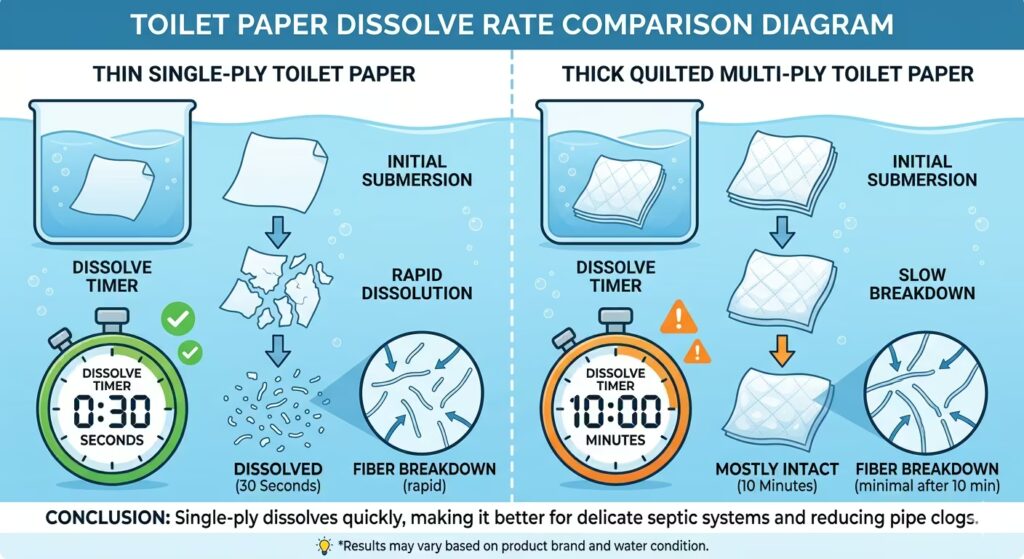
The key factor is how quickly the paper breaks apart when it contacts water. This is called the dissolve rate.
Septic-safe toilet paper uses shorter fibers and less binding material. It starts breaking apart within seconds and dissolves fully within a few minutes.
Toilet paper that is thick, quilted, or multi-ply uses longer fibers and more layers bonded together. It takes much longer to break down in water.

The simple test you can do at home
Fill a jar with water. Drop in a few sheets of your current toilet paper. Put the lid on and shake it ten times.
Septic-safe paper will break apart into small pieces or dissolve almost completely. Paper that stays in large sheets after shaking is not ideal for your system.
This is the same basic method used by plumbers and septic technicians to assess whether a product is safe.
Single-Ply vs Multi-Ply: Which Is Better for Septic?
Single-ply toilet paper is consistently the best choice for septic systems. It has one layer of paper and dissolves the fastest.
Two-ply paper is acceptable if it carries a septic-safe label and passes the jar test. It is more comfortable but dissolves more slowly.
Three-ply and ultra-thick quilted papers are the most problematic. They are designed for comfort, not for dissolving. Avoid these if you have a septic system.
How Popular Toilet Paper Brands Compare
The following comparison is based on general product characteristics and widely reported consumer and plumber feedback for each brand type.
| Brand / Type | Plies | Dissolve Rate | Verdict |
| Scott 1000 | 1-ply | Very fast | Best choice |
| Seventh Generation | 2-ply | Fast | Best choice |
| Angel Soft | 2-ply | Moderate | Good choice |
| Cottonelle Ultra | 2-ply | Moderate | Good choice |
| Charmin Ultra Soft | 2-ply | Slow | Use sparingly |
| Charmin Ultra Strong | 2-ply | Slow | Avoid |
| Quilted Northern Ultra | 3-ply | Very slow | Avoid |
| Store brand single-ply | 1-ply | Very fast | Best choice |
Store-brand single-ply toilet paper often performs as well as or better than premium brands for septic safety. It is also the most cost-effective choice.
What Does “Septic Safe” on the Label Actually Mean?
There is no universal standard that defines septic safe on toilet paper packaging. It is largely a marketing claim rather than a regulated certification.
Some manufacturers test their products using the INDA/EDANA voluntary guidelines for flushability. Others apply the label without formal testing.
The most reliable indicator is still the dissolve rate. Single-ply paper from any reputable brand will typically outperform thick premium paper regardless of labeling.
| TIP: Do Not Rely on the Label Alone |
|---|
| A “septic safe” label is a starting point, not a guarantee. Run the jar test described above with any new brand before committing to it. Your tank will thank you. |
Recycled Toilet Paper and Septic Systems
Recycled toilet paper is generally a good choice for septic systems. It tends to use shorter fibers and less processing than virgin pulp paper.
Brands like Seventh Generation, Who Gives a Crap, and Caboo are popular options that combine environmental credentials with good septic performance.
One thing to check is whether recycled paper contains bisphenol A (BPA) from recycled thermal paper. Some brands test and certify BPA-free. This is worth looking for.
Bamboo Toilet Paper: Is It Safe for Septic?
Bamboo toilet paper has become increasingly popular as an eco-friendly alternative. Most bamboo-based brands dissolve well and are suitable for septic systems.
Bamboo fibers are naturally shorter than wood pulp fibers. This makes them break apart in water more readily.
Check that the bamboo paper you choose does not use heavy fragrances or lotions. These additives can interfere with the bacterial balance in your tank.
What to Avoid Completely
- Scented or lotion-infused toilet paper: additives disrupt tank bacteria
- Ultra-thick or quilted three-ply paper: dissolves very slowly
- Moist toilet wipes of any kind: do not break down at all
- Antibacterial toilet paper: kills the beneficial bacteria in your tank
How Much Difference Does Toilet Paper Choice Actually Make?
Used by one or two people, toilet paper choice has a modest but measurable effect on sludge accumulation over several years.
In a larger household of four or more people, the difference between fast-dissolving and slow-dissolving paper can add up to months of additional sludge buildup per year.
Switching to a septic-safe brand is one of the lowest-effort changes you can make. It costs the same as or less than premium brands and consistently reduces strain on your system.
| RELATED: How to Empty a Septic Tank |
|---|
| Even with the best toilet paper, your tank still needs regular pumping. Read our guide on how often to schedule it and what to expect during a septic pump visit. |
Frequently Asked Questions
Can I use any single-ply toilet paper for my septic system?
Yes, single-ply paper from any mainstream brand is generally safe for septic systems. The dissolve rate is fast enough that it does not accumulate significantly.
Run the jar test to confirm before buying in bulk.
Does expensive toilet paper damage septic systems?
Premium thick toilet paper is not necessarily damaging in moderate amounts. The concern is consistent use by a full household over years.
Thick paper breaks down more slowly, which means it contributes more to sludge buildup than thinner alternatives used over the same period.
Is it worth switching brands if my system seems fine?
If your tank is being pumped on schedule and showing no signs of stress, your current paper is probably not causing serious harm.
Switching to a faster-dissolving brand is still a worthwhile preventive measure. It extends the time between pump cycles and reduces long-term wear on the system.
What if multiple people in my household prefer different brands?
A practical compromise is to keep one roll of premium paper for occasional use and use single-ply as the default. The overall dissolve rate across your system will still be lower than using thick paper exclusively.
The Bottom Line
The best toilet paper for your septic system is single-ply, unscented, and free of lotions or antibacterial additives.
Scott 1000, Seventh Generation, and store-brand single-ply consistently perform well. Thick premium brands like Charmin Ultra Strong and Quilted Northern are the ones to avoid or use sparingly.
This is a small, low-cost change that makes a real difference to the long-term health of your septic system.