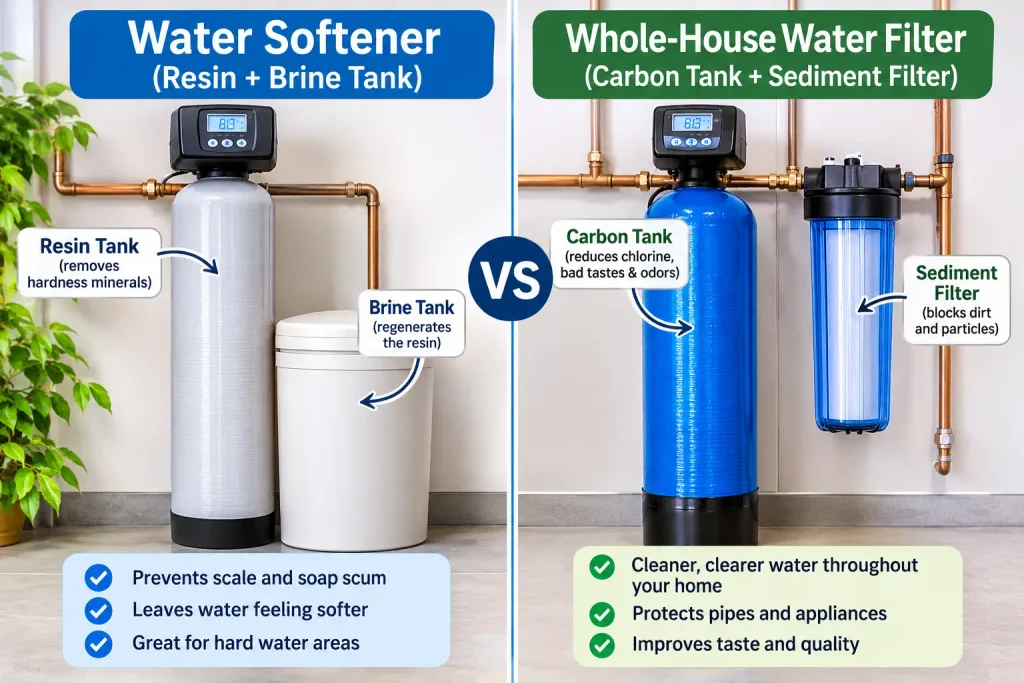
A water softener and a water filter fix different problems. A softener removes the calcium and magnesium that cause scale, spots and toilet rings. A filter removes things like chlorine, sediment and, depending on the type, contaminants such as lead. If your problem is white crust and spots, you need a softener. If it is chlorine smell, bad taste or grit, you need a filter. Plenty of homes need both.
Water Softener vs. Water Filter at a Glance
| Water softener | Water filter | |
|---|---|---|
| What it removes | Hardness minerals: calcium and magnesium | Chlorine, chloramine, sediment, and other contaminants depending on type |
| How it works | Ion exchange: resin beads swap hardness for sodium or potassium | Physical straining (sediment), adsorption (carbon), or a membrane (reverse osmosis) |
| Fixes | Scale, spots on glass, toilet rings, poor soap lather, scale in water heaters | Chlorine taste and smell, cloudy or gritty water, specific contaminants |
| Does not fix | Chlorine, taste, odor, lead, bacteria | Hardness (except reverse osmosis at a single tap) |
| Ongoing cost | Salt (or potassium) and regeneration water | Replacement cartridges or media |
| Where it goes | Main line, before the water heater | Main line (whole-house) or at one tap (under-sink, pitcher) |
Which Problem Do You Have?
| What you notice | Likely cause | What fixes it |
|---|---|---|
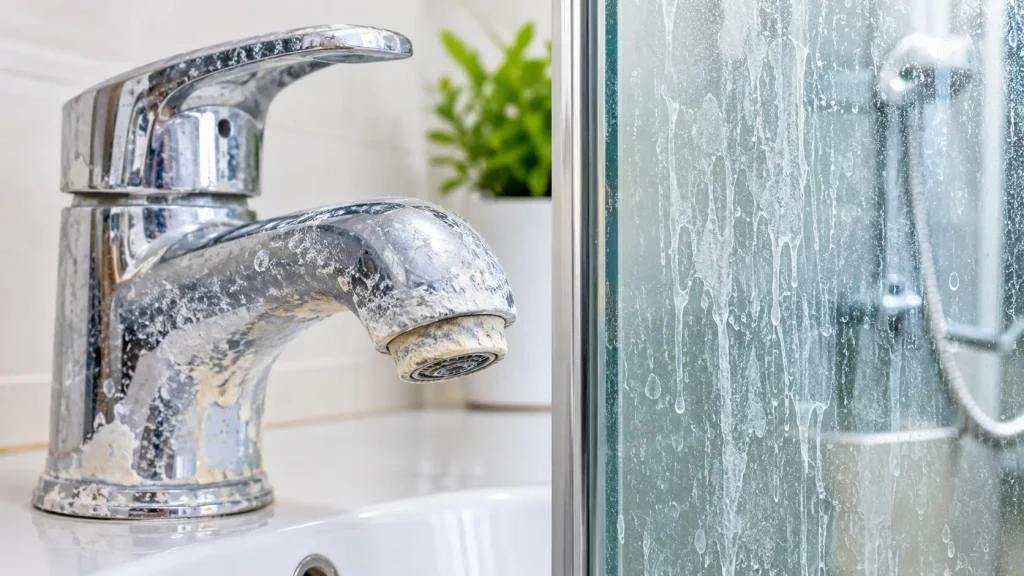
| White crust on faucets and showerheads | Hard water (calcium and magnesium) | Softener |
| Brown or rust-colored ring in the toilet | Hard water minerals or iron | Softener (filter for heavy iron) |
| Spots on dishes and glass shower doors | Hard water | Softener |
| Soap and shampoo will not lather | Hard water | Softener |
| Pool or bleach smell from the tap | Chlorine or chloramine from the utility | Carbon filter |
| Sand, grit or cloudiness | Sediment | Sediment filter |
| Metallic taste, or old lead pipes in the home | Metals from pipes | Certified point-of-use filter (NSF/ANSI 53) |
| Rotten-egg smell | Hydrogen sulfide or bacteria, often in wells | Test first; specialized filter or treatment |
| Pink ring in the toilet | Airborne bacteria, not your water | Cleaning, not equipment |
Not sure? Our toilet bowl ring guide and hard water stains guide show what each kind of buildup looks like.
How a Water Softener Works
A softener is a tank of small resin beads. As hard water flows through, the beads grab calcium and magnesium and release sodium (or potassium) in their place. When the beads are full, the softener “regenerates”: it flushes the resin with salty brine from the second tank, which pushes the hardness minerals down the drain and recharges the beads.
The U.S. Geological Survey says hardness is not a health concern, but it causes scale that clogs pipes, shortens appliance life and makes water heaters less efficient (USGS). That is the problem a softener solves. Salt-free conditioners are a middle option: they change the minerals so they do not stick to surfaces, but they leave them in the water. Our best water softeners guide compares both types.
How a Water Filter Works
- Sediment filters strain out sand, silt and rust, measured in microns. A 5-micron filter catches particles much smaller than a grain of sand.
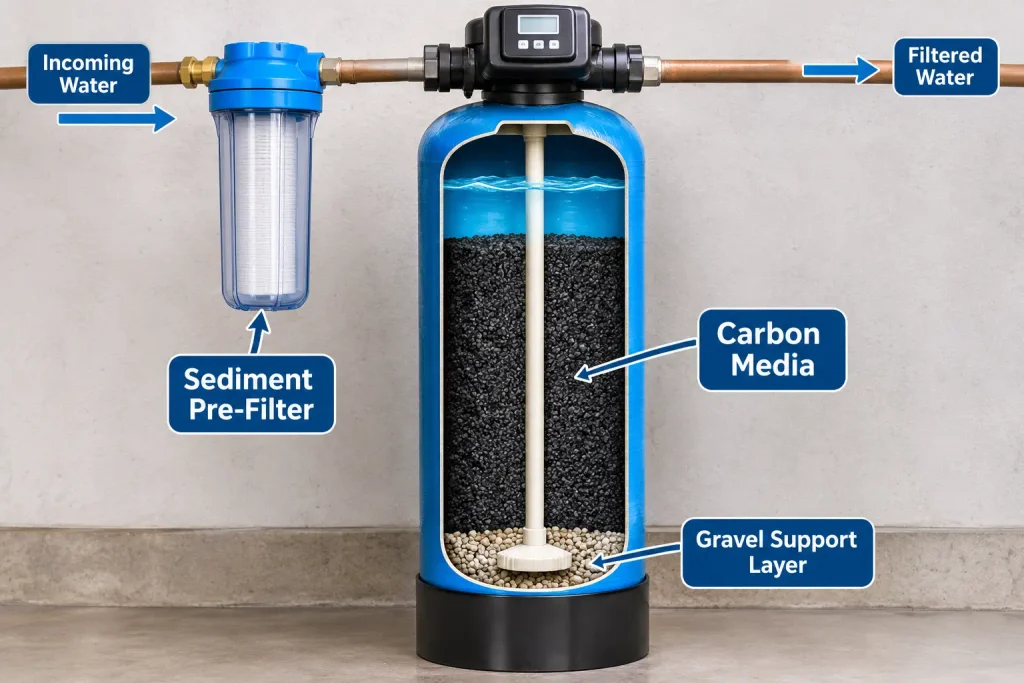
- Activated carbon filters trap chlorine, many organic chemicals and odors on the surface of the carbon. Catalytic carbon also handles chloramine.
- KDF (copper-zinc) media is often paired with carbon to help reduce chlorine and some metals.
- Reverse osmosis pushes water through a membrane that removes most dissolved solids, including much of the hardness, lead and salts. It is slow, so it is usually installed at one tap for drinking water.
A whole-house filter treats every tap, while an under-sink or pitcher filter treats only drinking water. See our best whole-house water filters and best water filter systems for both.
Do You Need Both?
You need both if you have hard water and chlorine, taste or sediment problems, which is common on city water in hard-water regions. In that case:
- Filter first. A sediment and carbon filter goes first on the main line. Removing chlorine before the softener also protects the softener resin, which chlorine wears down over time.
- Softener second, still before the water heater, so the heater gets soft water.
- Optional: add a reverse osmosis filter at the kitchen sink if you want the highest-quality drinking water or need lead removal.
Some makers sell filter-and-softener combos on a shared bypass, which can simplify installation.
How to Find Out What Is in Your Water
- City water: your utility must publish an annual water quality report (often called a Consumer Confidence Report). It lists hardness and whether chlorine or chloramine is used.
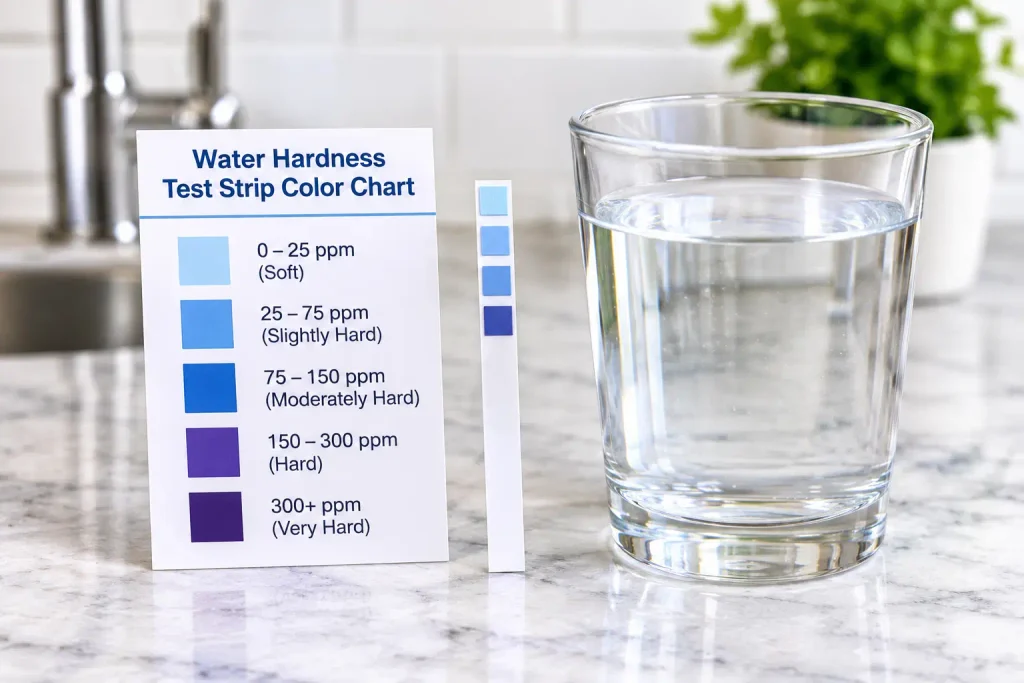
- Hardness: inexpensive test strips give a reading in minutes. Above about 7 grains per gallon (120 mg/L) is considered hard.
- Well water: use a certified lab test for bacteria, nitrates, iron, manganese and hardness before buying anything. Your county health department can usually point you to one.
Septic Systems and Water Treatment
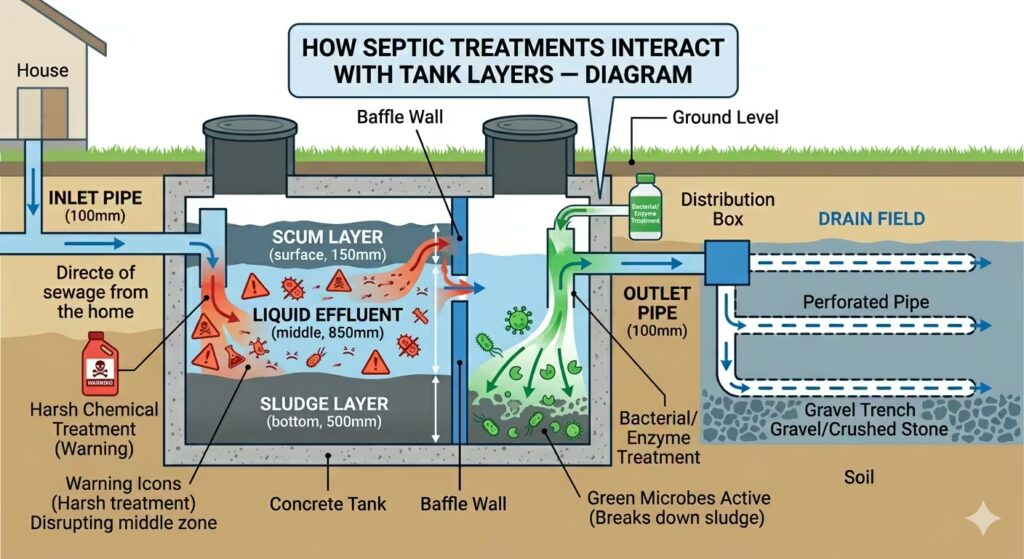
If you are on a septic system, the regeneration water from a softener adds to the load on your tank. The EPA notes that water softeners and purification systems can send hundreds of gallons of water to a septic tank (EPA). Choose a softener with efficient demand or metered regeneration, and read our septic system care guide for other ways to protect your tank and drainfield.
What Each One Costs to Own
Upfront prices vary widely. Long-life tank systems such as the Aquasana Rhino filter or a SpringWell filter-and-softener combo sit at the premium end, while cartridge filters such as the iSpring WGB32B and DIY softeners such as the Aquasure Harmony cost a fraction of that. Compare current prices in our best whole-house water filters and best water softeners guides. Running costs matter just as much:
| Water softener | Whole-house filter | |
|---|---|---|
| Regular purchases | Salt or potassium pellets | Sediment pre-filters, every few months |
| Major replacement | Resin, after many years | Carbon media or cartridges, from about 1 year (cartridges) to 10 years (large tanks) |
| Water use | Some water during each regeneration | None beyond normal use |
| Electricity | A small amount for the control head | Usually none |
A good rule: compare the total over 5 years, not just the box price. A cheap cartridge system that needs new cartridges every year can end up costing more than a tank system that runs for a decade.
Maintenance: Softener vs. Filter
- Softener: check the salt monthly, break up any salt crust, and clean the brine tank every year or two. The resin lasts many years if chlorine is filtered out first.
- Filter: change the sediment pre-filter on the maker’s schedule. A clogged pre-filter is the most common cause of low water pressure. Replace carbon media or cartridges when the rated gallons or years are up, even if the water still looks fine, because chlorine removal fades before you can taste it.
- Both: fit bypass valves so you can service either one without shutting off the house.
Common Myths
- “A water filter will stop scale.” Standard sediment and carbon filters do not remove calcium or magnesium, so scale keeps forming.
- “Salt-free softeners soften water.” They condition it. The minerals stay in the water; they are just less likely to stick to surfaces.
- “Softened water tastes salty.” The sodium added depends on how hard your water was. In moderately hard water, most people cannot taste it. Very hard water adds more, which is why some people switch to potassium or drink from a filtered tap.
- “A softener cleans my water.” It only removes hardness. It does nothing for chlorine, lead or bacteria.
Frequently Asked Questions
Can a water filter remove hardness?
Standard sediment and carbon filters cannot. Reverse osmosis removes most hardness, but only at the tap where it is installed. For the whole house, you need a softener or a salt-free conditioner.
Does a softener make water safe to drink?
A softener does not remove bacteria, lead or chemicals. Softened water is fine to drink for most people, but if you need cleaner drinking water, add a filter.
Will a softener help my water heater?
Yes. Less scale means less sediment in the tank and fewer popping and rumbling noises. It also means you will need to flush the water heater less often to keep it efficient.
Does a water softener remove iron?
Some, if it is dissolved. Many salt-based softeners handle small amounts of “clear water” iron, the kind that comes out of the tap clear and turns orange later. Whirlpool’s WHES40, for example, is rated for up to 10 ppm (Whirlpool manual). Water that is already rusty or leaves heavy red stains needs a dedicated iron filter before the softener.
Can I install a softener or filter myself?
If you can cut and join pipe on your main line and have a drain and outlet nearby, yes; most systems install in an afternoon. If the main line is hard to reach, or you would need to add a drain or cut into old galvanized pipe, a plumber is worth the cost.
Which should I buy first if I can only afford one?
Fix the problem that bothers you most. Scale damaging fixtures and appliances points to a softener. Smell, taste or sediment points to a filter. If you are worried about health contaminants like lead, start with a certified drinking water filter at the kitchen sink, which costs the least of all.
The Short Version
Spots, scale and crust mean hard water, and a water softener fixes them. Smell, taste and grit mean you need a whole-house water filter. Test your water before you buy either, and install the filter first if you need both.
About HomePlumbing101
HomePlumbing101 turns manufacturer manuals, product specifications and public guidance from sources like the U.S. EPA and Department of Energy into plain, step-by-step help for homeowners. Every guide flags the jobs that need a licensed plumber. We are an information site only and do not offer plumbing or HVAC services. More about how we write our guides.