Walk into any hardware store, and you will find a shelf full of septic tank treatments. The packaging promises to break down waste, eliminate odors, and reduce the frequency of pumping.
But do these products deliver on those promises? The honest answer depends entirely on which type of product you are looking at and what you are trying to achieve.
This guide breaks down every type of septic treatment, tells you which ones are worth buying in specific situations, and covers which common household products are safe to use around a septic system.
Quick Answer: What’s the Best Septic Treatment?
If you need a fast recommendation of the best septic treatment before reading the full breakdown, here it is.
| Your Situation | Best Septic System Treatment Type | Well-Known Example |
| Healthy system, normal household use | None needed | Save your money |
| After a course of antibiotics | Bacterial treatment | RID-X, Green Gobbler |
| After heavy bleach or chemical use | Bacterial treatment | Cabin Obsession, Bio-Tab |
| Vacation home or low-use property | Monthly bacterial packets | RID-X Monthly, Walex |
| Heavy grease from kitchen use | Enzyme treatment | BioClean, Zep |
| Just had the tank pumped | Optional bacterial boost | Any reputable bacterial brand |
| Chemical additives or solvent-based | Avoid entirely | Skip these completely |
| The most important thing to understand upfront |
|---|
| Even the best-rated septic tank treatment can’t replace regular pumping. Products that claim otherwise are not being truthful. A bacterial treatment supports a healthy system — it does not fix or maintain one on its own. |
How a Healthy Septic Tank Already Works
Before evaluating septic tank treatments, it helps to understand what a well-functioning tank already does.
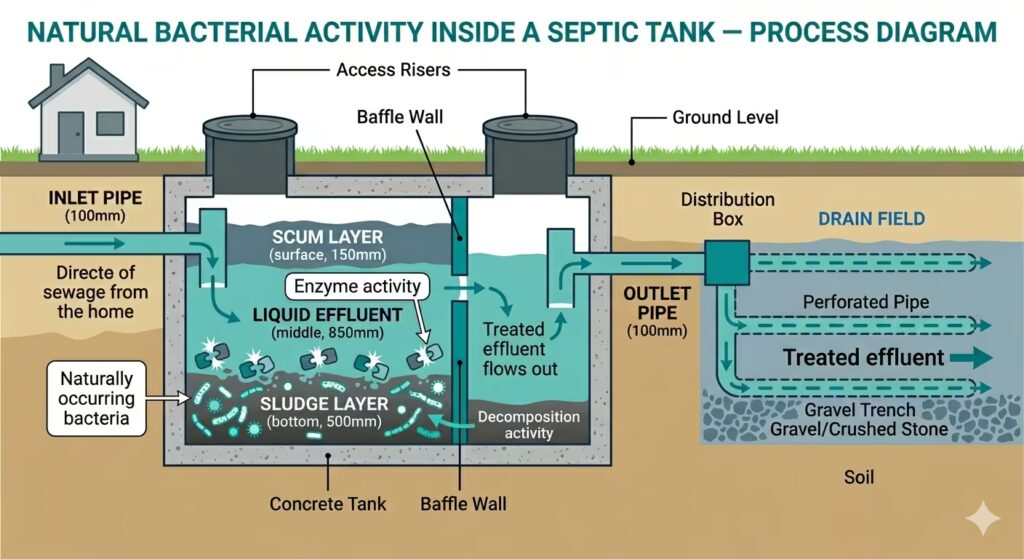
A healthy septic tank contains billions of naturally occurring bacteria and enzymes. These microorganisms continuously break down solid waste, preventing the sludge layer from accumulating too quickly.
The system is largely self-sustaining when it receives the right inputs. Problems arise when that bacterial population is disrupted or when the tank receives more waste than the bacteria can process.
The Three Types of Septic Tank Treatments
Not all septic treatments work the same way. There are three main categories, and they have very different effects on your system.
1. Biological treatments: bacteria and enzymes
These are the most widely recommended types. They introduce additional bacteria or enzymes into the tank to supplement the naturally occurring population.
Bacterial treatments contain live microorganisms that colonize the tank and assist with waste breakdown. Enzyme treatments introduce specific proteins that accelerate the digestion of fats, proteins, and starches.
These products are generally considered safe and can be beneficial in specific situations, which we cover below.
2. Chemical treatments
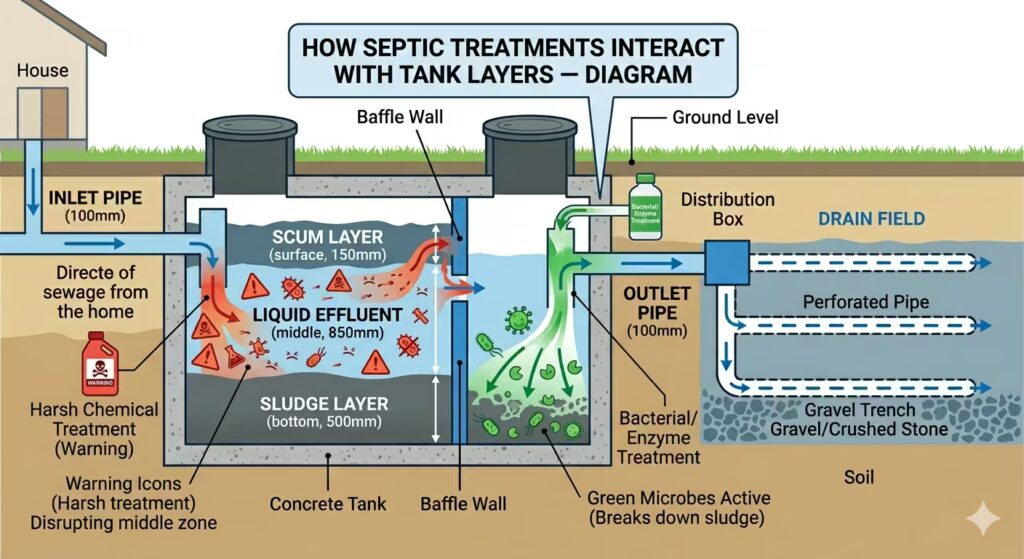
Chemical treatments typically use strong acids or solvents to break down solids or clear blockages. They are fast-acting but come at a cost.
Most chemical treatments kill the beneficial bacteria in your tank along with whatever they are targeting. They disrupt the biological balance on which the system depends.
Several states have banned certain chemical septic additives outright. If you see a product containing sulfuric acid, sodium hydroxide, or heavy solvents, avoid it entirely.
3. Inorganic compounds
Some older treatments use inorganic compounds like baking soda or hydrogen peroxide. These are generally harmless but also largely ineffective.
They do not add beneficial bacteria, do not break down solids, and do not meaningfully extend the time between pump cycles.
| Treatment Type | Effect on System | Verdict |
| Bacterial / enzyme | Supplements natural bacteria | Safe, sometimes helpful |
| Chemical (acid/solvent) | Kills bacteria, disrupts balance | Avoid completely |
| Inorganic compounds | Minimal biological effect | Largely ineffective |
Do Septic Tank Treatments Work?
This is the question most homeowners really want answered. The honest answer is: it depends on what you are trying to achieve.
When they can help
After antibiotic use. If a household member has taken a course of antibiotics, some of that medication passes through the body and into the septic system. This can temporarily reduce the tank’s bacterial population.
A bacterial treatment added after a course of antibiotics can help restore the microbial balance more quickly than waiting for natural recovery.
After heavy chemical use. If a large amount of bleach, drain cleaner, or disinfectant has entered the tank, a bacterial treatment can help replenish the lost population.
After the tank has been pumped. Some homeowners add a bacterial treatment after pumping to help re-establish the biological activity in the freshly emptied tank. This is not strictly necessary, as bacteria repopulate naturally, but it can accelerate the process.
In low-use systems. Vacation homes or properties used infrequently may not generate enough organic waste to sustain a healthy bacterial population. A monthly bacterial treatment can keep the system active.
When they do not help
A healthy, regularly pumped tank with normal household use does not need supplemental treatments. The natural bacterial population is already sufficient.
No bacterial or enzyme treatment can substitute for regular pumping. If your tank is overfull with sludge, adding bacteria will not solve the problem.
Even the top septic tank treatments cannot repair a failing drain field or reverse structural damage to the tank. They address biological balance only.
| IMPORTANT: Septic Tank Treatment Is Not a Substitute for Pumping |
|---|
| Some products claim they eliminate the need to pump. This is not supported by evidence. Bacteria break down the liquid fraction of waste but cannot eliminate the inorganic solids that accumulate over time. Pumping remains essential. |
What the Research Actually Says
The US Environmental Protection Agency (EPA) has reviewed the evidence on septic additives. Their position is that biological additives are neither harmful nor necessary for a properly functioning system.
Independent studies on bacterial treatments have produced mixed results. Some show modest improvements in sludge reduction under certain conditions. Others show no significant difference compared to untreated tanks.
The scientific consensus is that a well-maintained system with regular pumping, careful flushing, and no chemical disruption outperforms any system that relies on additives as a shortcut.
| RELATED: What Not to Flush If You Have a Septic Tank |
|---|
| The most effective thing you can do for your septic system costs nothing. Read our guide on the everyday habits that protect your tank better than any product on a shelf. |
How to Choose a Bacterial Treatment if You Decide to Use One
If you are in one of the situations where a bacterial treatment makes sense, here is what to look for.
- Look for products that list specific bacterial strains on the label, such as Bacillus subtilis or Lactobacillus. Generic “beneficial bacteria” claims without specifics are less reliable.
- Choose products with a documented CFU count (colony-forming units). Higher CFU counts indicate more live bacteria per dose.
- Avoid any product that combines bacteria with chemical solvents or surfactants. The chemicals will kill the bacteria before they reach the tank.
- Check whether the product has been tested to NSF/ANSI Standard 40 or 46. These are independent certifications for septic-related products.
- Liquid or dissolvable packet formats tend to reach the tank more effectively than solid tablets dropped in the toilet.
How to Use Septic Tank Treatment Correctly
Even the most effective septic tank treatment only works if it is used properly. Timing and method both matter.
When to add treatment
- Add treatment at night or when the household will not be using water heavily for several hours. This gives the bacteria time to reach the tank and begin establishing before being flushed through.
- Flush the septic tank treatment down the toilet rather than pouring it down a sink drain. The toilet provides the most direct route to the tank.
- If using treatment after antibiotic use, begin adding it during the final days of the antibiotic course rather than waiting until the antibiotic course is finished.
Dosage and frequency
Follow the manufacturer’s dosage instructions on the product you choose. Most bacterial treatments recommend a higher initial dose followed by a smaller monthly maintenance dose.
For a healthy system with no specific disruption, monthly dosing is not necessary. Reserve ongoing use for low-use properties or systems that have experienced a bacterial disruption.
What not to do after adding septic tank treatment
- Do not use bleach, antibacterial cleaners, or chemical drain cleaners in the 48 hours after adding a bacterial treatment. They will kill the newly introduced bacteria before they can establish themselves.
- Do not run excessive water through the system in the hours immediately after septic tank treatment. Heavy water use flushes the bacteria out before they can colonise.
Top Septic Treatments: An Honest Overview
The following overview covers widely available product types. It is based on publicly documented formulations and general performance characteristics rather than brand endorsement.
| Product Type | Active Ingredient | Best Use Case | Verdict |
| Monthly bacterial packets | Live bacterial strains | Low-use or post-antibiotic systems | Worth trying |
| Enzyme liquid treatments | Lipase, protease, amylase | Grease-heavy systems | Moderately useful |
| Toilet drop-in tablets | Varies widely | General maintenance | Limited evidence |
| Yeast-based treatments | Active dry yeast | Post-pump restart | Low cost, mild benefit |
| Chemical drain additives | Acids or solvents | None — harmful to the system | Avoid |
The DIY Option: Active Dry Yeast
One home remedy that has been passed down for decades is to flush a packet of active dry yeast down the toilet once a month.
Yeast is a living organism and introduces some enzymatic activity into the tank. It is not harmful and costs almost nothing.
However, yeast is not the same as the bacteria your tank relies on. It contributes modest enzyme activity but does not replicate or sustain itself as purpose-built bacterial treatments do.
Think of it as a very minor supplement rather than a meaningful treatment. It will not hurt anything, but do not expect dramatic results.
Common Household Products: Are They Safe for Your Septic System?
Several common household cleaning and personal care products raise questions about septic safety. Here is a clear answer for each one.
| Product | Safe for Septic? | Notes |
| Bleach (toilet cleaner, small amounts) | Yes, in moderation | Normal cleaning use is fine. Avoid pouring large quantities directly down the drain. |
| Bleach (large concentrated amounts) | No | A full bottle poured down a drain kills beneficial bacteria and disrupts the system. |
| Liquid-Plumr / Drano | No | These are caustic chemical drain cleaners. They damage bacteria populations and corrode older pipes. Use enzyme-based alternatives instead. |
| Poo-Pourri and similar toilet sprays | Generally yes | Most are plant-based and safe in normal use. Check the ingredients for alcohol or synthetic fragrance in high concentrations. |
| Antibacterial hand soap (normal use) | Yes, in normal use | Small daily amounts are diluted enough to have minimal impact. Avoid pouring concentrated antibacterial products directly down the drain. |
| Dishwasher detergent | Generally yes | Use phosphate-free detergents. High phosphate formulas can interfere with the drain field’s soil biology over time. |
| Laundry detergent | Generally yes | Use liquid detergent rather than powder. Powders contain fillers that accumulate in the tank. Spread laundry loads across the week. |
| Paint, solvents, motor oil | No | Never pour these down any drain connected to a septic system. Dispose of through local hazardous waste programmes. |
| Vinegar and baking soda (drain cleaning) | Yes | Safe for septic systems in any normal quantity. A good chemical-free alternative to drain cleaners. |
| RELATED: What Not to Flush If You Have a Septic Tank |
|---|
| Products are only part of the picture. Read our full guide on the physical items — wipes, cotton, feminine products, and more — that cause the most damage to septic systems. |
What Actually Keeps a Septic System Healthy
After reviewing the evidence, the conclusion is straightforward. The habits that consistently produce healthy septic systems are not products — they are practices.
- Pump the tank every 3 to 5 years on a consistent schedule
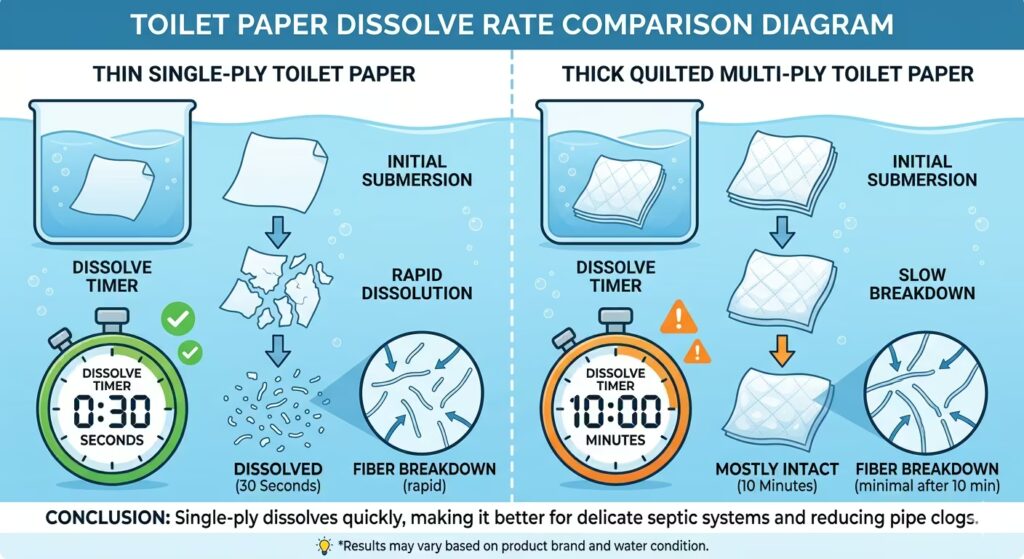
- Use septic-safe toilet paper that dissolves quickly
- Keep wipes, chemicals, medications, and grease out of the system
- Spread household water use across the day and week to avoid overloading the system
- Protect the drain field from vehicle traffic and root intrusion
- Have the system professionally inspected every 5 to 7 years
| RELATED: How to Empty a Septic Tank |
|---|
| Regular pumping is the one maintenance task no product can replace. Read our complete guide on how the process works, what it costs, and how to choose a reliable service. |
| RELATED: Best Toilet Paper for Septic Systems |
|---|
| The toilet paper you choose every day has a measurable effect on your sludge accumulation rate. Read our guide to find out which brands dissolve fastest. |
Frequently Asked Questions
What is the most effective septic tank treatment?
For a household that has experienced a bacterial disruption — from antibiotics or heavy chemical use — a high-CFU bacterial treatment from a reputable brand is the most effective option. Green Gobbler, Cabin Obsession, and RID-X are consistently cited by septic professionals.
For a healthy system with no disruption, the most effective septic tank treatment is no treatment at all. Good maintenance habits consistently outperform any product.
How often should I use a septic tank treatment?
For a healthy, regularly used system, monthly bacterial treatments are not necessary. Reserve them for specific situations: after antibiotics, after heavy chemical use, or in a low-use property.
If you choose to use a monthly septic system treatment as a precaution, a bacterial product is the safest option. Follow the manufacturer’s dosage instructions and avoid using chemical cleaners for 48 hours after application.
Is bleach safe for septic tanks?
In normal household amounts, yes. Cleaning a toilet bowl with bleach once or twice a week is diluted enough by the time it reaches the tank to have minimal impact on the bacterial population.
The problem is large, concentrated amounts — a full bottle of bleach poured directly down a drain at once. That level of exposure can significantly disrupt the tank’s bacterial balance.
Is Liquid-Plumr safe for septic systems?
No. Liquid-Plumr and similar chemical drain cleaners contain sodium hydroxide or sodium hypochlorite in high concentrations. These are caustic to bacteria and can damage older pipe materials over time.
For drain clogs in a home with a septic system, use a drain snake, a plunger, or an enzyme-based drain cleaner instead. These clear blockages without harming the tank.
My neighbor swears by a specific brand. Should I trust that?
Anecdotal experience is not the same as evidence. A healthy tank may appear to respond well to treatment simply because it was already in good condition.
If your neighbor’s situation matches one of the genuine use cases — low-use property, post-antibiotic treatment, or post-pump restart — their positive experience is plausible. Otherwise, consistent maintenance habits matter far more than any brand.
Can a septic treatment fix a failing drain field?
No over-the-counter septic system treatment can repair a failing drain field. Some professional aeration services can restore partial function in mildly saturated fields, but this requires a qualified technician.
If your drain field is showing signs of failure, the right step is a professional evaluation — not a store-bought product.
Is it worth spending money on septic treatments every month?
For most households with a healthy, regularly pumped system, the answer is no. That money is better spent on a scheduled pump visit.
If you have a specific situation, such as a low-use property, post-antibiotic recovery, or a history of chemical use, a periodic bacterial treatment is a reasonable and low-cost precaution.
Save Your Money for the Pump Truck
Septic tank treatments are not a scam, but they are also not the solution most homeowners are looking for. A healthy system does not need them.
The situations where bacterial treatments genuinely help are specific and temporary. Outside of those cases, good maintenance habits do more for your system than anything in a bottle.
Spend your budget on regular pumping and watchful flushing, and schedule a professional inspection as the system ages. Those three things will extend your septic system’s life far more reliably than any shelf product.