A septic tank buried in your yard is easy to forget about. Unlike appliances in your home, it gives no obvious signs of age until something goes wrong.
Knowing how long your tank is expected to last helps you plan. Replacing a septic system on your own terms is far less stressful than doing it during a crisis.
This guide covers how long different types of tanks last, what shortens their lifespan, and when replacement is the right call.
How Long Does a Septic Tank Last on Average?
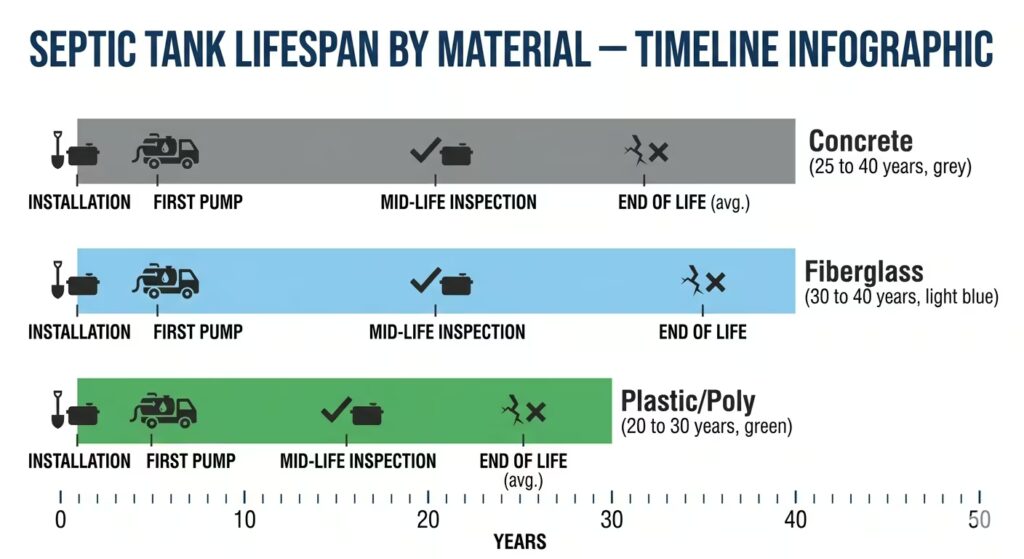
The lifespan of a septic tank depends heavily on the material it is made from. Most residential tanks are concrete, fiberglass, or plastic.
With proper maintenance, a well-installed tank can last several decades. Neglect, poor soil conditions, or the wrong material for the site can significantly cut that.
| Tank Material | Expected Lifespan | Key Consideration |
| Concrete | 25 to 40 years | Can crack over time; most common |
| Fiberglass | 30 to 40 years | Resistant to cracking and corrosion |
| Plastic (polyethylene) | 20 to 30 years | Lightweight but can shift in wet soil |
| Steel | 15 to 20 years | Rusts; rarely installed today |
Steel tanks are now largely obsolete, but older homes may still have them. If you have a steel tank, a professional inspection is worthwhile to assess its current condition.
What Affects How Long a Septic Tank Lasts?
A tank’s material is only one factor. How long it actually lasts is shaped by several things within and outside your control.
Pumping frequency
A tank that is never pumped fills with sludge, forcing solids into the drain field. This damages the field and strains the tank itself.
Regular pumping every 3 to 5 years is the single biggest factor in extending tank life. It removes accumulated solids before they cause irreversible damage.
| RELATED: How to Empty a Septic Tank |
|---|
| Regular pumping is the foundation of septic tank longevity. Read our full guide on how often to schedule it, what the process involves, and what a technician should check. |
What goes into the system
Flushing non-biodegradable items, harsh chemicals, or large amounts of grease accelerates sludge buildup and disrupts the bacterial balance.
A tank that processes only appropriate waste and biodegradable toilet paper lasts significantly longer than one that absorbs years of household chemicals.
| RELATED: What Not to Flush If You Have a Septic Tank |
|---|
| What goes down your drains directly impacts how long your system lasts. Read our guide on the items that cause the most damage. |
Soil and groundwater conditions
High water tables, clay-heavy soils, and areas prone to flooding all add additional stress to buried tanks.
Concrete tanks in acidic soil conditions are particularly vulnerable. Soil acidity corrodes concrete from the outside over time, leading to cracks and structural failure.
Tree root intrusion
Tree roots seek out moisture and can infiltrate cracks in older concrete tanks or the joints between tank sections.
Once roots enter the tank, they grow rapidly and can cause significant structural damage. Keep large trees and shrubs at least 10 feet from the tank and drain field.
Traffic and weight over the tank
Parking vehicles or placing heavy structures over a buried septic tank causes soil compaction and physical stress on the tank walls.
Even repeated foot traffic over the drain field compresses the soil and reduces its ability to absorb treated effluent.
Signs Your Septic Tank May Be Failing
A failing tank rarely collapses without warning. There are usually signs weeks or months before a full system failure.

- Slow drains in multiple fixtures throughout the house at the same time
- Gurgling sounds from toilets or drains after flushing
- Sewage odors inside the home or near the tank and drain field outside
- Soggy, spongy ground or standing water above the drain field
- Unusually lush, fast-growing grass directly over the drain field
- Sewage is backing up into the lowest fixtures in the house
- The tank needs to be pumped more frequently than usual
One or two of these signs may have an isolated explanation. Multiple signs appearing together, however, usually indicate a system that is at or beyond its limits.
Repair vs Replace: How to Decide
Not every problem with a septic system means full replacement. Some issues are repairable at a fraction of the cost.
| Problem | Likely Solution |
| Full tank, system otherwise healthy | Pump and inspect |
| Cracked inlet or outlet baffle | Baffle replacement (low cost) |
| Minor crack in the concrete tank | Seal with hydraulic cement (if accessible) |
| Blocked distribution box | Clean or replace the distribution box |
| Partial drain field failure | Aeration treatment or partial replacement |
| Structural tank collapse | Full system replacement required |
| Complete drain field saturation | New drain field required |
| Severe root intrusion throughout | Full system evaluation needed |
A licensed septic inspector can assess exactly what is happening and give you an honest recommendation on whether to repair or replace.
Get at least two opinions before committing to a full replacement. It is one of the most significant home system expenses a property owner faces.
How Much Does Septic Tank Replacement Cost?
A full septic system replacement typically costs between $5,000 and $15,000 for a conventional system. Complex or larger installations can run significantly higher.
The major cost variables are the size of the system needed, the type of drain field required, soil conditions, local permit fees, and labor rates in your area.
In areas with high water tables or challenging soils, alternative systems such as mound systems or aerobic treatment units are required. These cost considerably more.
| System Type | Typical Cost Range |
| Conventional gravity system | $5,000 to $10,000 |
| Mound system | $10,000 to $20,000 |
| Aerobic treatment unit (ATU) | $10,000 to $20,000 |
| Drip irrigation system | $12,000 to $25,000 |
These figures are estimates. Your local septic contractor will provide an accurate quote based on your property and requirements.
How to Find Out How Old Your Septic Tank Is
If you bought a home without knowing the septic system’s history, there are several ways to find out its age.
- Check your local county health department records. Many counties keep permits and installation records for septic systems.
- Look at the original building permit for your home. The septic installation is usually documented there.
- Ask your neighbors or previous owners if you can make contact with them.
- Have a licensed inspector locate and assess the tank. An experienced technician can often estimate the age and condition from a visual inspection.
Knowing when the tank was installed helps you anticipate when it may need replacement and budget accordingly.
How to Extend the Life of Your Septic Tank
Good habits extend tank life significantly. Most of these cost nothing and take very little effort.
- Pump the tank every 3 to 5 years without skipping cycles
- Use only septic-safe toilet paper and avoid wipes of any kind
- Avoid flushing chemicals, medications, grease, or non-biodegradable items
- Spread laundry loads across the week rather than doing all laundry in one day
- Fix household leaks promptly — a dripping faucet or running toilet adds excess water to the system daily
- Keep heavy vehicles and structures away from the tank and drain field
- Plant only grass over the drain field and keep tree roots well away
- Schedule a professional inspection every 5 to 7 years, even if nothing seems wrong
| TOOL: Smart Home Plumbing Checklist |
|---|
| Use our interactive plumbing checklist to track your septic maintenance schedule, get a home plumbing health score, and make sure nothing gets missed year to year. |
Frequently Asked Questions
How do I know what type of septic tank I have?
A licensed inspector can identify the tank material during a pump-and-inspect visit. You can also check your original property records or county health department files.
Concrete is by far the most common material in homes built before the 1990s. Fiberglass and plastic tanks became more common after that.
Can a concrete septic tank last 50 years?
It is possible, but not common. Concrete tanks installed with quality materials, in favorable soil conditions, and maintained consistently can approach that range.
Most concrete tanks begin showing signs of wear between 25 and 40 years. An inspection in that window tells you where yours stands.
Is it worth repairing an old tank, or should I just replace it?
If the tank itself is structurally sound and only the baffles or distribution box need attention, repair is usually worth it.
If the tank is over 30 years old, cracked, and the drain field is also showing signs of failure, replacement is the more practical investment.
Do I need a permit to replace a septic tank?
Yes, in virtually every jurisdiction. Septic work is regulated at the county or state level and requires permits and inspections.
A licensed septic contractor will handle the permitting process as part of the job. Never allow work on a septic system without proper permits.
Can a failed drain field be restored without full replacement?
Sometimes. Aeration treatment and field rest by directing flow elsewhere can restore partial function in mildly damaged drain fields.
A completely saturated or biologically dead drain field usually requires physical replacement. A soil and system evaluation will confirm which situation you are dealing with.
Your Tank Has a Timeline — Know Where You Are On It
A septic tank is a long-term investment in your property. Most last 25 to 40 years with proper care, and some even longer.
The homeowners who get the most out of their systems are the ones who pump on schedule, watch what they flush, and catch problems early.
If you do not know how old your tank is or when it was last inspected, now is the time to find out. The cost of a professional inspection is a fraction of what an emergency replacement would cost.