As an Amazon Associate, I earn from qualifying purchases. Some links on this page may also go to other retailers’ affiliate programs, at no extra cost to you.
The best water softener for most homes is the Aquasana SimplySoft 40K Water Softener. It is certified to NSF/ANSI 44, the standard for water softeners, handles 15.5 gallons per minute and covers homes with up to 4 bathrooms. If you want the most popular option, the Aquasure Harmony 48,000-Grain is one of the best-selling softeners on Amazon, with more than 3,000 ratings. If you would rather skip salt entirely, the A. O. Smith Salt-Free Scale Control prevents scale without softening the water.
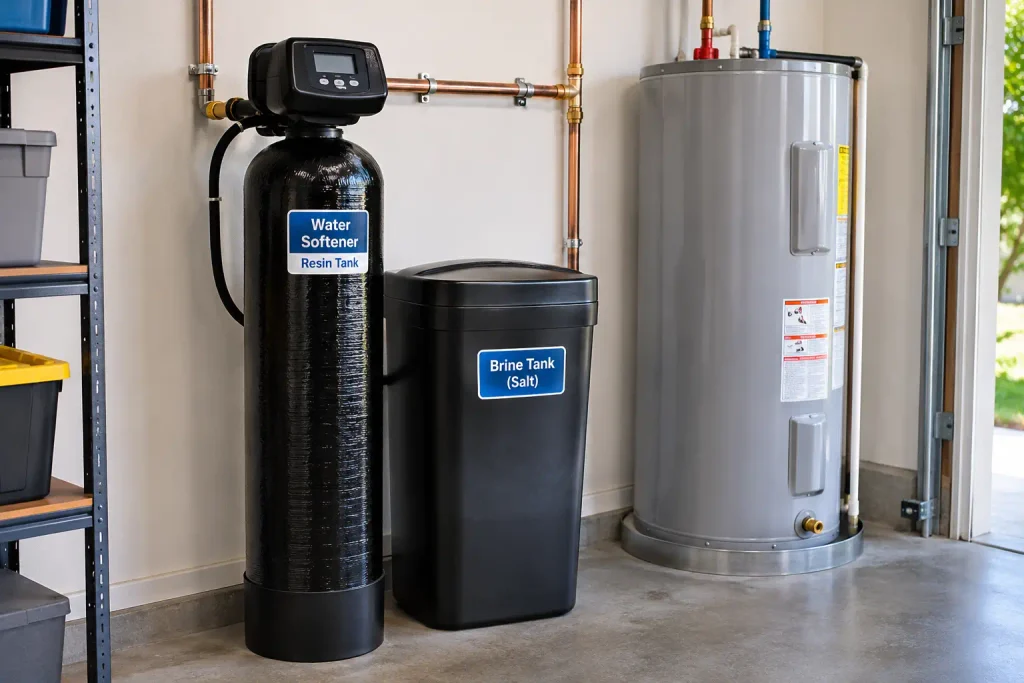
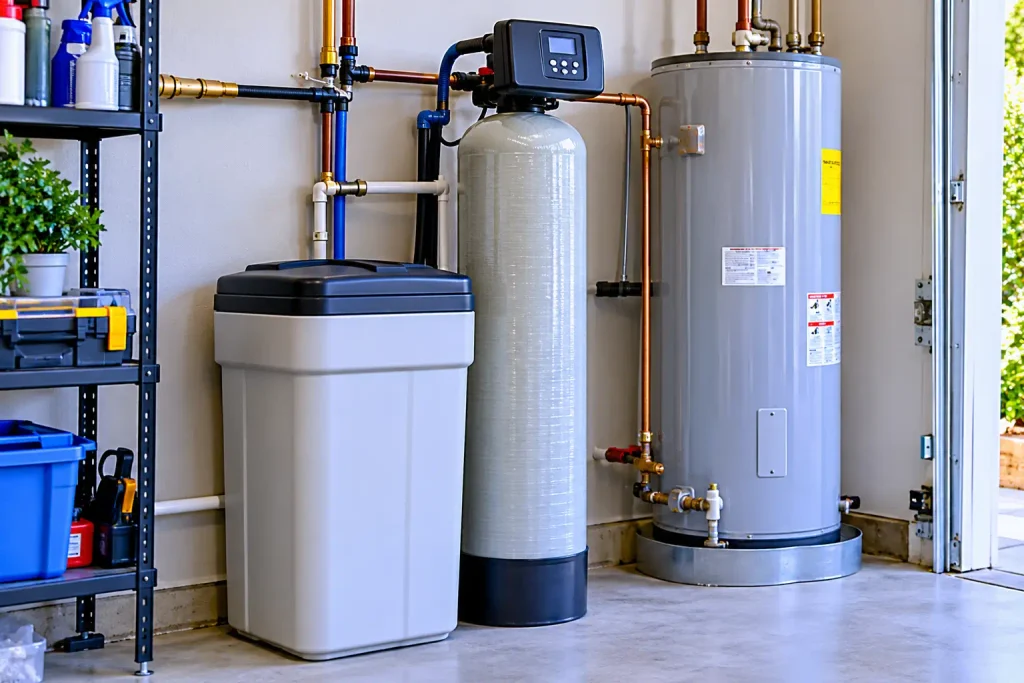
Hard water is what leaves brown and blue-green rings in the toilet bowl, white crust on faucets and showerheads, and scale inside your water heater. A softener fixes the cause instead of the symptoms.
Our Picks at a Glance
- Our pick: Aquasana SimplySoft 40K Water Softener. Independently certified, high flow, sold and shipped by Amazon.
- Best seller: Aquasure Harmony 48,000-Grain. Big capacity for the price and thousands of owner reviews.
- Best for DIYers: DURAWATER Fleck 5600SXT 48,000-Grain. Built on the most widely serviced softener valve in the U.S.
- Best salt-free: A. O. Smith Salt-Free Scale Control. No salt, no electricity, no wastewater; for moderately hard water.
- Best premium (sold direct): SpringWell SS1 Salt-Based Water Softener. Highest flow rates here, in three sizes up to 80,000 grains.
Comparison Table
| Model | Type | Capacity | Flow rate | Certification | Price range |
|---|---|---|---|---|---|
| Aquasana SimplySoft 40K | Salt-based, metered | 40,000 grains (60K version available) | 15.5 gpm | NSF/ANSI 44, CSA B483.1 | Mid |
| Aquasure Harmony 48K | Salt-based, metered | 48,000 grains (32K–50K versions) | 12 gpm | None listed | Budget–mid |
| DURAWATER Fleck 5600SXT 48K | Salt-based, metered | 48,000 grains, 1.5 cu ft resin | Not listed on the listing | None listed | Mid |
| A. O. Smith Salt-Free Scale Control | Salt-free scale control | 600,000 gallons or 6 years | 15 gpm | None listed | Budget |
| SpringWell SS1 / SS4 / SS+ | Salt-based | 32,000 / 48,000 / 80,000 grains | 11 / 13 / 20 gpm | None listed | Premium |
Do You Actually Need a Water Softener?
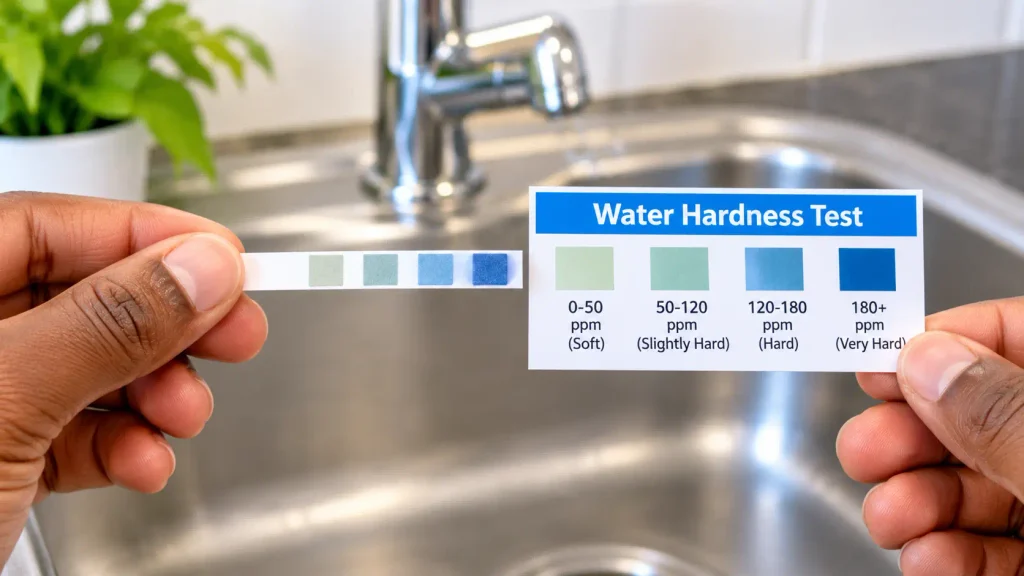
Hardness comes from calcium and magnesium. The U.S. Geological Survey classifies water by its hardness in milligrams per liter (mg/L): 0 to 60 is soft, 61 to 120 is moderately hard, 121 to 180 is hard, and above 180 is very hard (USGS). Softener makers use grains per gallon (gpg) instead; 1 gpg is about 17.1 mg/L, so “hard” water starts at roughly 7 gpg.
Hard water is not a health concern, according to the USGS, but it costs you in scale, extra soap and shorter appliance life. A softener is worth it if you see any of these:
- Rings in the toilet bowl or white crust on fixtures that come back within weeks of cleaning
- Spots on dishes and glass shower doors
- Soap and shampoo that will not lather well
- A water heater that pops and rumbles from sediment
- A water report or test strip showing more than about 7 gpg
To find your number, check your water utility’s annual water quality report, or use an inexpensive hardness test kit if you are on a well.
How to Size a Water Softener
Softeners are rated in grains: how much hardness they remove before they need to regenerate. A simple rule of thumb:
- Multiply the number of people in your home by 70 gallons, the EPA’s estimate of daily indoor water use per person (EPA).
- Multiply that by your hardness in gpg. That is how many grains you remove per day.
- Multiply by 7 for a week. Pick a softener rated at or above that number so it regenerates about once a week.
Example: 4 people × 70 gallons × 10 gpg = 2,800 grains a day, or 19,600 a week. A 32,000- or 40,000-grain softener covers that comfortably. Iron in the water uses up capacity too, so size up if you have it. Check the flow rate as well: too little flow means a pressure drop when two showers run at once. The picks below range from 11 to 15.5 gpm in their standard sizes.
The Best Water Softeners, Reviewed
1. Aquasana SimplySoft 40K: Our Pick
The SimplySoft is the only softener in this guide with an independent certification: it is IAPMO-certified to NSF/ANSI 44 for hardness reduction and to CSA B483.1. Aquasana rates it at 15.5 gpm, the highest flow among the 40,000-grain-class picks here, and sizes it for homes with up to 5 people and 4 bathrooms. Metered regeneration means it only regenerates when you have actually used enough water, which saves salt. It carries a 5/10-year limited warranty, and it is sold and shipped by Amazon. A 60,000-grain version is available for larger homes or very hard water.
Pros
- Certified to NSF/ANSI 44
- High 15.5 gpm flow rate
- Metered, salt-saving regeneration
- Sold and shipped by Amazon, so returns are simple
Cons
- Fewer reviews than the Aquasure so far
- Usually costs more than the Aquasure despite less capacity
- Not designed for homes with more than 4 bathrooms (choose the 60K version)
Best for: most homes that want a certified softener with strong flow.
2. Aquasure Harmony Series 48,000-Grain: Best Seller
The Harmony 48K is one of the best-selling whole-house softeners on Amazon, with more than 3,200 ratings and 400+ bought in the past month when we checked in November 2026. It offers 48,000 grains of capacity and a maximum flow of 12 gpm, and Aquasure sizes it for 3 to 4 bathrooms and 4 to 5 people. A digital metered control head shows flow rate, total usage and days until regeneration, and the brine tank holds about 200 pounds of salt. Activating the product online within 60 days extends the warranty to 5 years, and there is a 30-day money-back guarantee (Amazon listing). It also comes in 32,000, 40,000 and 50,000-grain sizes.
Pros
- Large capacity for the price
- Thousands of owner reviews
- Clear digital display
- Extended 5-year warranty when activated
Cons
- No NSF or WQA certification listed
- Lower flow (12 gpm) than the Aquasana (15.5 gpm)
- Warranty extension requires online registration
Best for: families who want lots of capacity without a premium price.
3. DURAWATER Fleck 5600SXT 48,000-Grain: Best for DIYers
The Fleck 5600SXT control valve is one of the most common softener valves in the U.S., so replacement parts, manuals and repair videos are easy to find. This DURAWATER package ships with 1.5 cubic feet of resin already loaded in the tank, an on-demand digital metered valve, a plastic bypass with a 1-inch yoke, and a 14 × 36-inch brine tank with a safety float to prevent overflows (Amazon listing). It has a 4.6-star rating from more than 370 owners.
Pros
- Proven, easily serviced Fleck valve
- Resin comes pre-loaded in the tank
- Bypass and safety float included
- Strong owner ratings
Cons
- Programming the valve takes more effort than a cabinet unit
- Flow rate not stated on the listing
- No certification listed
Best for: handy homeowners who will install and maintain it themselves.
4. A. O. Smith Salt-Free Scale Control: Best Salt-Free
This is a scale-prevention system, not a softener. A. O. Smith states plainly that it reduces scale buildup but does not soften water or remove the minerals that cause hardness. In return, it needs no salt, no electricity, no backwashing and no drain. It is rated for 600,000 gallons or about 6 years, flows up to 15 gpm through 3/4-inch connections, works on city or well water, and carries a 6-year warranty. It is designed for water under 15 gpg of hardness, with alkalinity under 250 mg/L, pH under 8.3 and less than 0.3 ppm of iron.
Pros
- No salt, power or wastewater
- Low price and long life
- Simple install with no drain needed
- Nearly 2,000 owner ratings
Cons
- Does not soften: soap lather and spots barely change
- Only for moderately hard water (under 15 gpg)
- Will not reduce iron, sulfur or dissolved solids
Best for: homes with moderately hard water, people on low-sodium diets, and areas where salt softeners are restricted.
5. SpringWell SS1 Salt-Based Water Softener: Best Premium
SpringWell sells its salt-based softener directly in three sizes: the SS1 (32,000 grains, 11 gpm, 1 to 3 bathrooms), the SS4 (48,000 grains, 13 gpm, 4 to 6 bathrooms) and the SS+ (80,000 grains, 20 gpm, 7 or more bathrooms). Those are some of the highest flow rates you will find. It includes an electronic control head with salt- and water-saving regeneration, a lifetime warranty against defects on the tanks, valves and fittings, and a 6-month money-back guarantee (SpringWell).
Pros
- Very high flow rates
- Sizes up to 80,000 grains for big homes
- Lifetime defects warranty
- 6-month money-back guarantee
Cons
- Priced as a premium system
- Sold direct, not on Amazon
- No NSF or WQA certification listed
Best for: large homes and buyers who want the highest flow and longest warranty.
Salt-Based vs. Salt-Free: Which Should You Choose?
| Salt-based softener | Salt-free scale control | |
|---|---|---|
| Removes calcium and magnesium | Yes, swaps them for sodium or potassium | No, changes how they behave |
| Stops scale | Yes | Reduces it |
| Spots on glass, soap lather | Noticeably better | Little change |
| Ongoing cost | Salt, plus regeneration water | Media replacement every several years |
| Wastewater and electricity | Yes | No |
Not sure whether you need a softener or a filter at all? Our guide to water softener vs. water filter explains the difference.
Things to Know Before You Install
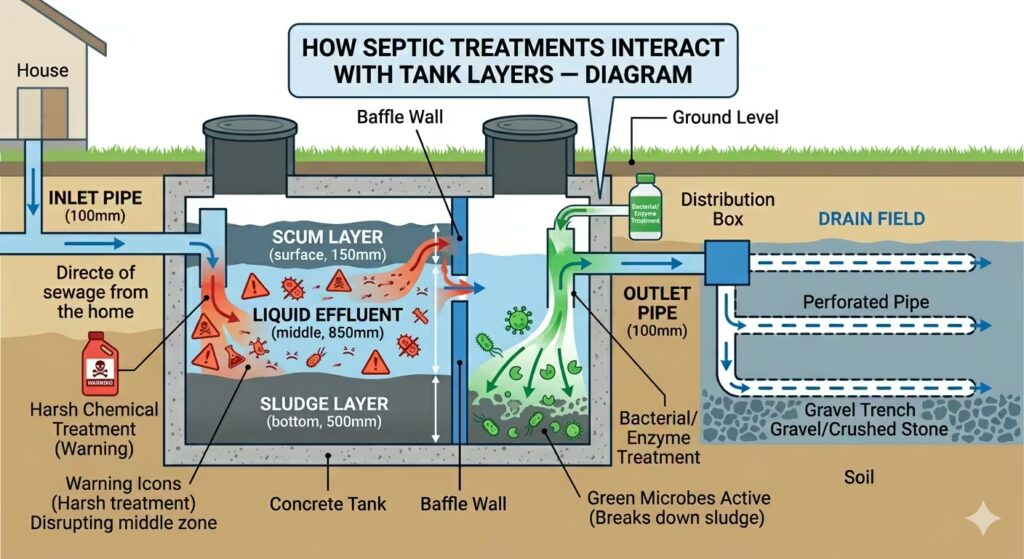
- Septic systems: the EPA notes that water softeners can send hundreds of gallons of regeneration water to a septic tank (EPA). The Aquasana, Aquasure and Fleck picks use metered regeneration, which keeps that to a minimum. See our septic system care guide.
- Local rules: some communities, particularly in parts of California, restrict salt-based softeners because of salt in wastewater. Check with your water utility first.
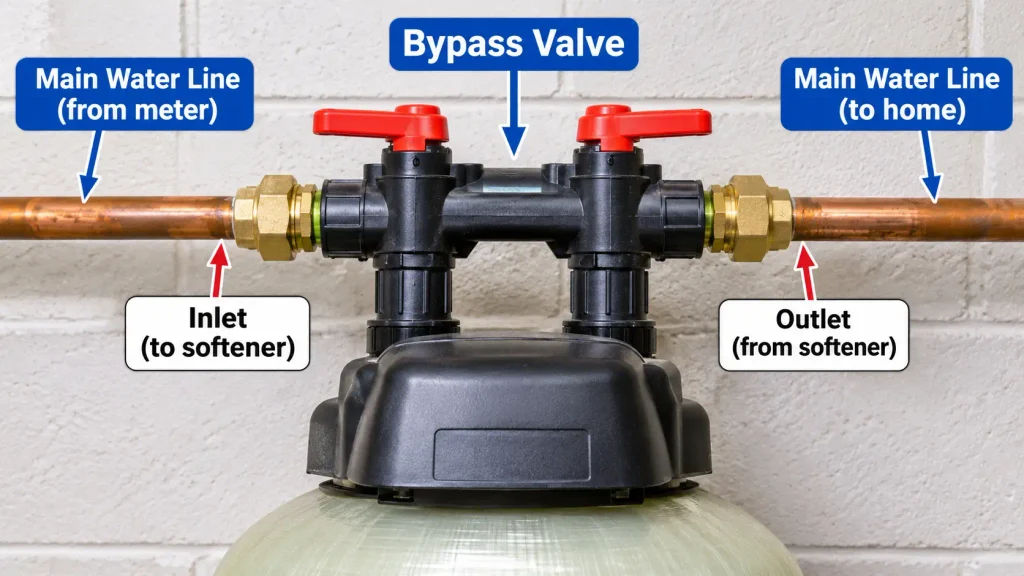
- Plumbing: you need a spot on the main line before the water heater, a drain for regeneration water and an outlet. A bypass valve lets you shut the softener off without cutting water to the house.
- Outdoor taps: many installers leave outdoor faucets on unsoftened water to save salt.
- Filter first: if your water is chlorinated or gritty, install a whole-house filter before the softener. Chlorine wears out softener resin over time.
- DIY or pro: a handy homeowner can install most systems in an afternoon if the plumbing is accessible. If you need to cut into copper or add a drain line, hire a plumber.
Frequently Asked Questions
Will a water softener get rid of toilet bowl rings?
It stops the brown and rust-colored rings caused by hard water minerals. It will not stop pink rings, which come from bacteria, or black rings from mold. Our toilet bowl ring guide explains each color.
Does a water softener remove chlorine or improve taste?
No. A softener only removes hardness. For chlorine, sediment and taste, you need a filter; see our best whole-house water filters.
Is softened water safe to drink?
For most people, yes. A salt-based softener adds a small amount of sodium in exchange for the hardness it removes, more so in very hard water. If you are on a sodium-restricted diet, ask your doctor, use potassium chloride instead of salt, or drink from an unsoftened or reverse osmosis tap.
How often do I add salt?
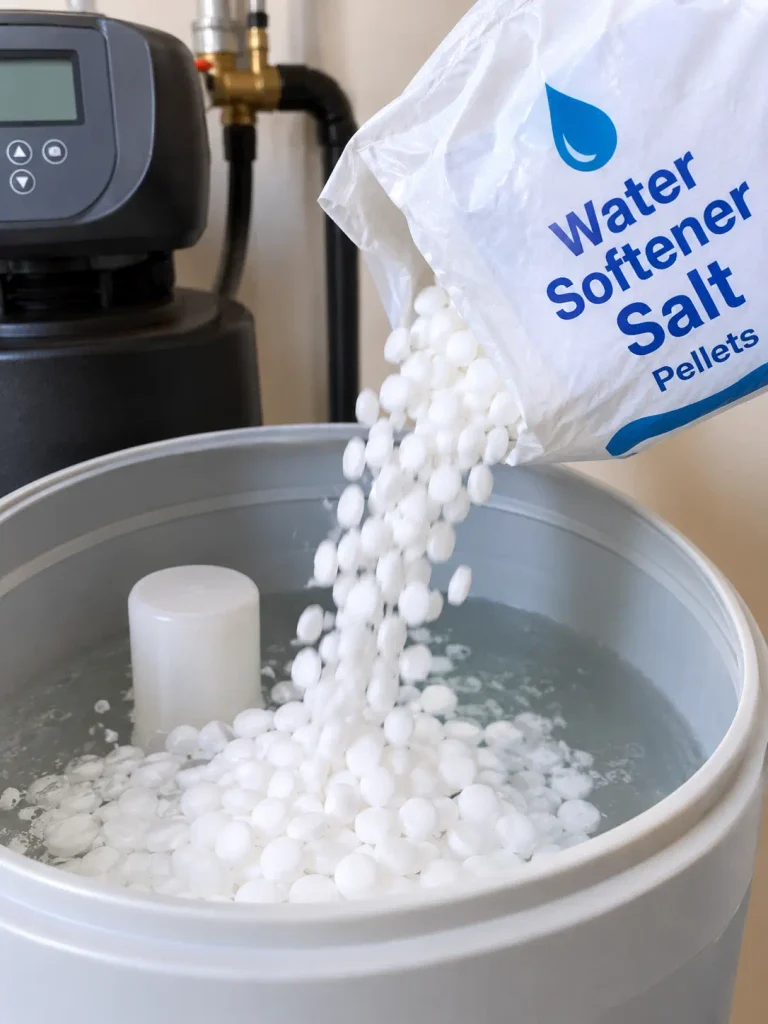
Check the brine tank monthly and keep it at least a quarter full. How often you refill depends on your hardness and water use; many homes top up every month or two. If the salt looks full but the water feels hard, break up any crust (“salt bridge”) with a broom handle.
Will a softener help my water heater?
Yes. Less scale means less sediment, quieter operation and better efficiency. If you are shopping for a new heater too, see our best tankless water heaters, which are especially sensitive to scale.
Our Recommendation
Test your water first. If it is above about 7 gpg, the Aquasana SimplySoft 40K Water Softener is the best all-round choice for most homes: certified, high-flow and easy to return through Amazon. If you want more capacity for less, the Aquasure Harmony 48K is the crowd favorite. For very large homes, the SpringWell SS1 and its bigger siblings deliver the most flow. And if your water is only moderately hard and you want to avoid salt, choose the A. O. Smith Salt-Free Scale Control.
About HomePlumbing101
HomePlumbing101 turns manufacturer manuals, product specifications and public guidance from sources like the U.S. EPA and Department of Energy into plain, step-by-step help for homeowners. Every guide flags the jobs that need a licensed plumber. We are an information site only and do not offer plumbing or HVAC services. More about how we write our guides.