A slow or blocked drain is one of the most common household problems. It is also one of the easiest to fix without reaching for a bottle of chemical drain cleaner.
Chemical drain cleaners work, but they come with real drawbacks. They corrode older pipes, kill the beneficial bacteria in septic systems, and are hazardous to handle and store around children and pets.
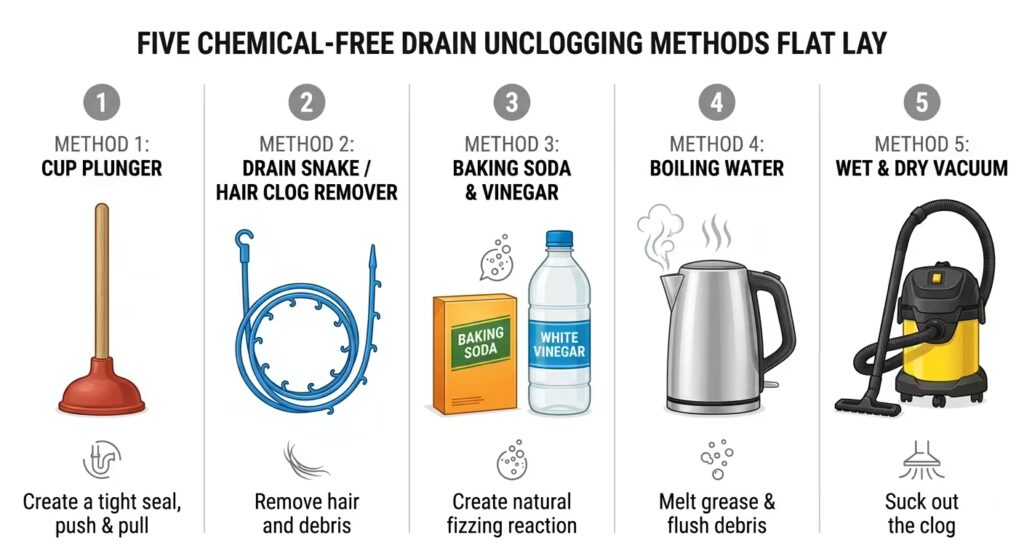
The five methods below use tools and household ingredients that are safe for your pipes, your septic system if you have one, and your home. Most of them can be done in under 15 minutes.
Before You Start: Identify the Type of Clog
A few quick observations before you begin will save you time by pointing you toward the most effective method.
| What You Observe | Likely Cause | Best Starting Method |
| Slow drain in one sink or shower | Hair or soap buildup near the drain | Method 3: Drain snake or hair tool |
| Water drains but leaves residue | Grease or soap scum coating pipes | Method 1: Boiling water or Method 4: Baking soda and vinegar |
| Standing water, not draining | Full blockage close to the drain opening | Method 2: Plunger |
| Multiple fixtures are slow at the same time | Main line or vent blockage | Call a plumber |
| Multiple slow drains at the same time mean a deeper problem |
|---|
| If your kitchen sink, bathroom sink, and shower are all draining slowly at once, the blockage is likely in the main sewer line rather than an individual drain. The methods in this guide will not reach it. Read our guide on main sewer line clogs for what to do. |
Method 1: Boiling Water
This is the simplest method and the right first move for slow drains rather than fully blocked ones. It works best on grease, soap scum, and light buildup coating the inside of the pipe.
What you need
- A kettle or pot of boiling water
How to do it
- Boil a full kettle or pot of water.
- Pour it slowly and directly down the drain in two or three stages. Wait 30 seconds between each pour to let the hot water work on the buildup.
- Run the cold tap for a few seconds to flush any loosened debris through.
| IMPORTANT: Do not use boiling water on PVC pipes |
|---|
| Boiling water can soften and warp PVC plastic pipes. If your home has PVC drain pipes — common in houses built after the 1970s — use very hot tap water instead of boiling. Still effective for grease and soap, but safe for the pipe. |
Boiling water alone will not shift a solid blockage of hair or debris. If the drain does not improve after two rounds, move to one of the methods below.
Method 2: The Plunger
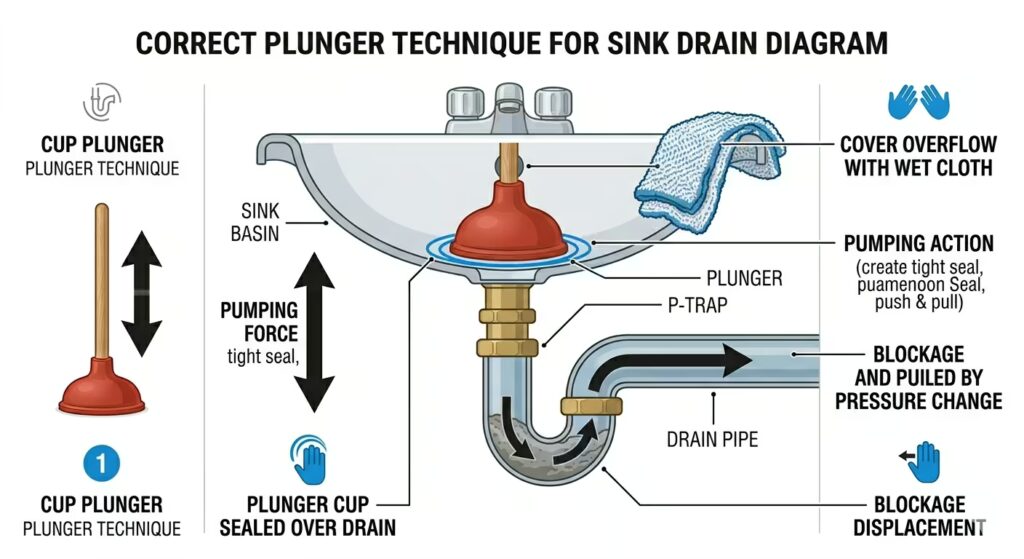
A plunger creates pressure and suction that dislodges blockages near the drain opening. It is fast, requires no ingredients, and works on sinks, showers, and bathtubs.
What you need
- A cup plunger — the flat-bottomed type used for sinks and tubs, not the flange plunger used for toilets
- A wet cloth or rag
How to do it
- Cover the overflow hole — the small opening near the top of the sink basin — with a wet cloth. This creates the airtight seal needed for the plunger to generate proper suction.
- Place the plunger cup completely over the drain opening and press down to form a seal with the basin floor.
- Add enough water to the basin to cover the bottom of the plunger cup. This helps maintain the seal.
- Push down firmly and pull up sharply in a steady rhythm. Do this 10 to 15 times without breaking the seal.
- On the final pull, yank the plunger away quickly. This sudden pressure release often dislodges the blockage.
- Run the tap to test whether the drain has cleared. Repeat if needed.
| Tip: Cover all connected drains in a double sink |
|---|
| If you have a double kitchen sink, cover the second drain with a wet cloth while plunging the blocked one. Without this, the pressure escapes through the open drain, and the plunger loses its effectiveness. |
Method 3: Drain Snake or Hair Removal Tool
A drain snake — also called a plumber’s snake — is a flexible cable that reaches into the pipe to physically break up or pull out a blockage. For hair clogs in particular, it is the most effective tool available.
For shallow hair clogs in shower and bathroom drains, a simple plastic hair removal tool costing around two dollars is often all you need. These have small barbs that catch hair and pull it out when removed.
What you need
- A plastic hair removal tool for shallow hair clogs, or
- A handheld drum auger or drain snake for deeper blockages
- Rubber gloves
How to do it with a hair removal tool
- Remove the drain cover, if present.
- Insert the plastic tool into the drain and push it down as far as it will go.
- Rotate it slightly and pull it back out slowly. Hair and debris will come with it.
- Dispose of the debris, rinse the tool, and repeat until nothing more comes out.
- Run hot water to flush the drain.
How to do it with a drain snake
- Feed the snake cable into the drain opening, rotating the handle clockwise as you push it in.
- When you feel resistance, you have reached the blockage. Continue rotating to break it up or hook into it.
- Pull the snake back out slowly, bringing the debris with it if hooked.
- Run hot water to flush the loosened material through.
| RELATED: Drain Snake vs Plunger — Which Should You Use? |
|---|
| Not sure which tool fits your situation? Read our comparison guide on when a plunger is enough and when a drain snake is the better choice. |
Method 4: Baking Soda and Vinegar
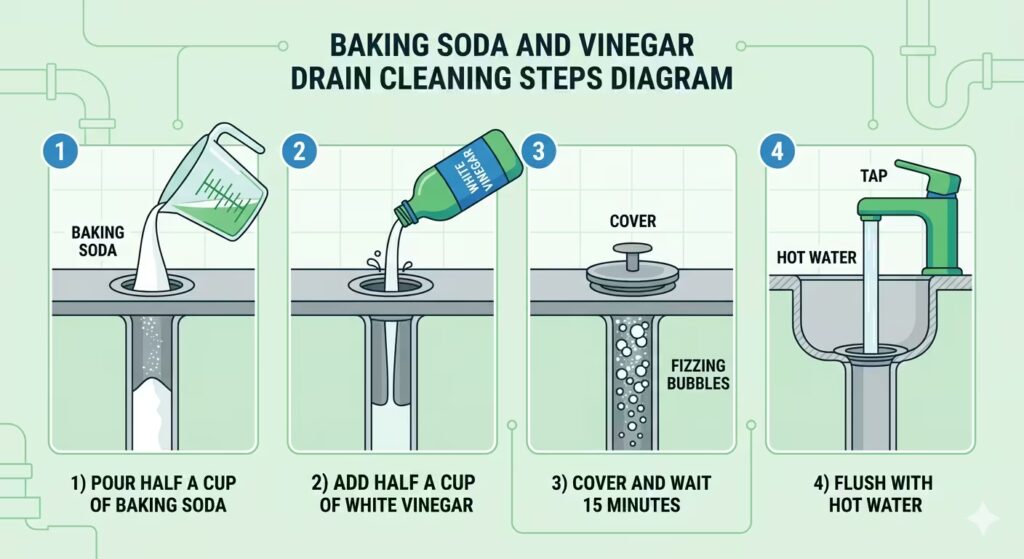
This combination creates a fizzing chemical reaction that can loosen light buildup, soap scum, and organic matter coating the inside of the pipe. It is not powerful enough to break up a solid hair clog, but it works well as a follow-up to drain snaking or as a preventive flush.
What you need
- Half a cup of baking soda
- Half a cup of white vinegar
- A drain stopper or a cloth to cover the drain
- A kettle of hot water
How to do it
- Pour the baking soda directly into the drain.
- Follow immediately with the white vinegar. The mixture will fizz and foam — this is the reaction working on the buildup inside the pipe.
- Cover the drain opening with a stopper or cloth to keep the reaction working downward rather than bubbling back up.
- Leave it for 15 to 20 minutes.
- Flush with a kettle of hot water — not boiling if you have PVC pipes — to wash the loosened material through.
This method is particularly useful as a monthly preventive flush to keep drains running freely before they slow down. It is safe for all pipe types in the quantities described.
Method 5: Wet and Dry Vacuum
A wet and dry vacuum can generate enough suction to pull a blockage out of a drain rather than pushing it further in. This works best for shallow blockages in sinks and bathtubs.
What you need
- A wet and dry vacuum — a standard household vacuum will not work and must not be used
- A cloth or rag to create a seal around the hose
How to do it
- Set the vacuum to its liquid or wet setting.
- Cover the overflow hole in the sink basin with a cloth to prevent air from escaping.
- Press the vacuum hose firmly over the drain opening, then wrap a cloth around the hose and the drain to create the tightest possible seal.
- Turn the vacuum on at full power for 20 to 30 seconds.
- Check the vacuum canister — if debris has been pulled out, the blockage has shifted. Run the tap to confirm the drain is clear.
This method works best as a complement to drain snaking rather than a standalone fix. It pulls out what the snake has already loosened rather than breaking up a solid clog on its own.
When These Methods Are Not Enough
The five methods above effectively handle most household drain clogs. There are situations, however, where a plumber is the right call.
- The drain is completely blocked, and none of the methods above produces any improvement
- Multiple drains in the house are slow or blocked at the same time
- You can hear gurgling from other drains when one is in use
- There is a sewage smell coming from the drains indoors
- Water backs up into other fixtures when you use the sink or shower
| RELATED: Main Sewer Line Clog — Signs, Causes, and What to Do |
|---|
| When more than one drain is affected, the problem is almost certainly deeper in the system. Read our guide on identifying and addressing a main sewer line blockage. |
How to Keep Drains Clear in the First Place
The best drain problem is the one that never happens. A few consistent habits keep most household drains running freely without any intervention.
- Use a drain strainer or hair catcher in every shower and bathtub drain
- Run hot water down the kitchen drains for 30 seconds after washing up to flush grease through
- Never pour cooking grease or oil down any drain
- Do a baking soda and vinegar flush once a month as a preventive measure
- Clean the drain stoppers in sinks regularly — hair and soap collect on the underside of the stopper itself
- Avoid flushing anything other than toilet paper down toilets
Frequently Asked Questions
Are chemical drain cleaners ever worth using?
Chemical cleaners can shift clogs that the above methods cannot, but they come at a cost. They corrode older metal pipes over time and are highly caustic if they come into contact with skin or eyes.
If you have a septic system, avoid them entirely. They kill the beneficial bacteria that the system depends on. For stubborn clogs, a drain snake or a plumber is a safer choice than repeated chemical use.
Why does my drain keep blocking in the same place?
Recurring clogs in the same drain usually mean the pipe has a rough interior surface — from corrosion, scale buildup, or an older pipe joint — that traps debris and causes repeated clogs.
A recurring kitchen drain clog usually means grease is coating the inside of the pipe. Switch to flushing the drain with hot water after every use, and the frequency should reduce significantly.
Can I use a plunger on a shower drain?
Yes. Use a cup plunger — the flat-bottomed type — and remove the drain cover first if it has one. Cover any overflow openings in the shower tray if present.
For shower drains, the hair removal tool or drain snake is usually more effective than plunging alone, since hair clogs tend to be tangled rather than compacted.
How often should I clean my drains?
A monthly baking soda-and-vinegar flush keeps most drains clear with no effort. Kitchen drains benefit from a hot water flush after every heavy use.
Shower and bathtub drains need their strainers emptied regularly — weekly in households with long hair is not excessive.
Does the direction of drain spinning affect anything?
No. The idea that water drains in different directions in different hemispheres is a popular myth. Your drain direction is determined by the design of your fixture and pipe, not geography.
Clear Drains Without the Chemical Warfare
Most household clogs yield to one of these five methods. A hair removal tool and a plunger handle the vast majority of blocked drains, with baking soda and vinegar keeping things clear in between.
You do not need corrosive chemicals sitting under your sink for this. The tools in this guide are cheaper, safer, and better for your pipes over the long run.
Keep a cup plunger and a plastic hair removal tool in every bathroom, and you will handle most drain problems before they become anything more than a minor inconvenience.