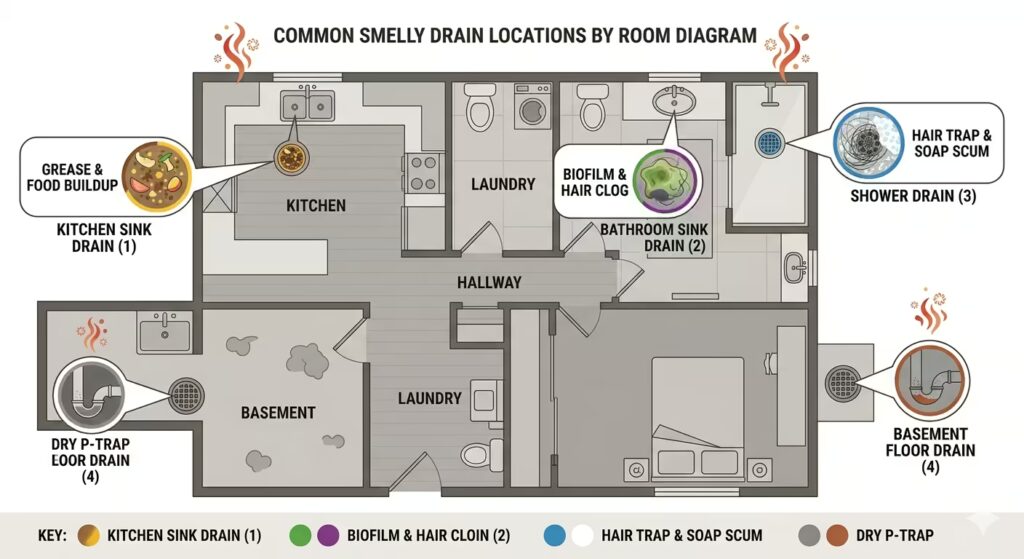
A bad smell coming from a drain is one of those household problems that is hard to ignore and easy to put off fixing. Most of the time, it is not a sign of anything seriously wrong, but it will not go away on its own.
The cause of a smelly drain depends almost entirely on which drain it is and what has been going down it. A kitchen drain smells for different reasons than a shower drain or a basement floor drain.
This guide walks through every common drain smell scenario by location, tells you exactly what is causing it, and gives you a clear fix for each.
Quick Reference: Drain Smell by Location
| Location | Most Likely Cause | First Fix to Try |
| Kitchen sink | Grease and food buildup in the drain | Boiling water flush and baking soda rinse |
| Bathroom sink | Biofilm and soap scum on the drain stopper | Clean the stopper and drain cover |
| Shower drain | Hair and soap scum clog | Remove hair clog, flush with hot water |
| Bathtub | Overflow plate biofilm or hair clog | Clean overflow plate and drain cover |
| Basement floor drain | Dry P-trap | Pour water down the drain |
| All drains at once | Sewer gas is entering through the system | Check all P-traps and call a plumber |
Smelly Kitchen Sink Drain
The kitchen drain handles more organic material than any other drain in the house. Grease, food particles, soap, and cooking residue all pass through it daily.
Over time, this material coats the inside of the pipe and the underside of the drain cover, creating a film of decomposing organic matter. This is almost always the source of a rotten or musty odour from a kitchen sink.
The fix
- Remove the drain cover, then clean the underside thoroughly with a brush and hot, soapy water. The biofilm on the underside of the cover is often the primary source of the smell.
- Pour a kettle of hot water slowly down the drain to loosen the grease coating the pipe walls. Use very hot tap water rather than boiling if you have PVC pipes.
- Pour half a cup of baking soda down the drain, followed by half a cup of white vinegar. Cover the drain and leave for 15 to 20 minutes. Flush with hot water.
- If the odour persists, use a drain snake or a plastic hair removal tool to pull out any debris caught just below the drain opening.
Prevent it from coming back
Run hot water down the kitchen drain for 30 seconds after every wash-up. This flushes grease through the pipe while it is still liquid rather than letting it cool and coat the walls.
Never pour cooking grease or oil down the sink. Once it cools inside the pipe, it creates the sticky coating that traps food particles and produces odour.
| If the kitchen drain also drains slowly |
|---|
| A smell combined with slow drainage usually indicates that a partial clog is the source of the odour. Read our guide on how to unclog a drain without chemicals for the most effective approach to kitchen drains. |
Smelly Bathroom Sink Drain
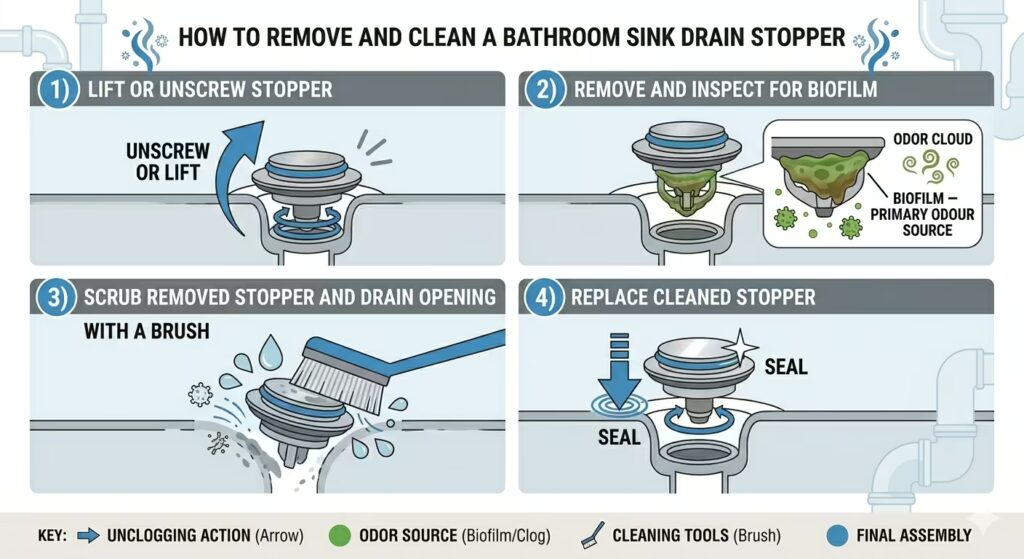
Bathroom sink drains collect toothpaste residue, soap scum, skin cells, and hair daily. The drain stopper — the small plug that sits in the drain opening — is almost always the primary culprit.
Most bathroom sink stoppers are removable and have a thick coating of dark biofilm on the underside after a few months of use. This material smells musty or like rotten eggs when disturbed.
The fix
- Remove the drain stopper. Most unscrew counterclockwise or lift straight out. Some are connected to a pivot rod under the sink — unscrew the nut on the back of the drain pipe under the sink to release it.
- Scrub the stopper thoroughly with an old toothbrush and hot, soapy water. The dark coating on the underside is the source of the odour.
- While the stopper is out, use a plastic hair removal tool to pull out any hair and debris from the drain opening.
- Pour baking soda and vinegar down the drain, then leave for 15 minutes before rinsing with hot water.
- Replace the stopper and run hot water for a minute to clear any remaining residue.
Smelly Shower Drain
Shower drains collect hair, soap scum, shampoo residue, and skin cells with every use. A clog of this material just below the drain cover traps moisture and begins to decompose, producing a musty or sulphurous smell.
In most cases, the smell is coming from a visible or near-surface hair clog rather than from deep in the pipe. This makes it one of the easiest drain smells to fix.
The fix
- Remove the shower drain cover — usually held by one or two screws or by a simple snap-out.
- Use a plastic hair removal tool or a pair of needle-nose pliers to remove accumulated hair and soap scum. Dispose of it directly into a bin rather than trying to wash it away.
- Clean the drain cover itself with a brush and hot, soapy water. Soap scum on the cover contributes to the smell.
- Pour baking soda and vinegar down the drain, then leave for 15 minutes. Rinse with hot water.
- Replace the cover and run the shower for a brief time to confirm the smell has cleared.
| The simplest long-term fix for the shower drain smell |
|---|
| A drain hair catcher placed over the shower drain opening catches hair before it enters the pipe. Cleaning it out after every shower takes 10 seconds and eliminates the most common cause of shower drain odour. |
Smelly Bathtub Drain
Bathtub drains smell for the same reasons as shower drains — hair and soap scum accumulation. However, bathtubs have one additional odour source that showers do not: the overflow plate.
The overflow plate is the oval cover at the top of the bathtub that prevents overflow. Behind it sits a rarely cleaned chamber that accumulates significant biofilm and hair over time.
The fix
- Unscrew the overflow plate and remove it. The hair and biofilm buildup behind it is often the primary odour source in bathtub drains.
- Clean the plate and the visible chamber behind it with a brush and hot soapy water.
- Use a drain snake fed through the overflow opening to clear any material caught deeper in the overflow pipe.
- Address the main drain opening the same way as a shower drain — remove the cover, pull out hair buildup, and flush with baking soda and vinegar.
Smelly Basement or Utility Room Floor Drain
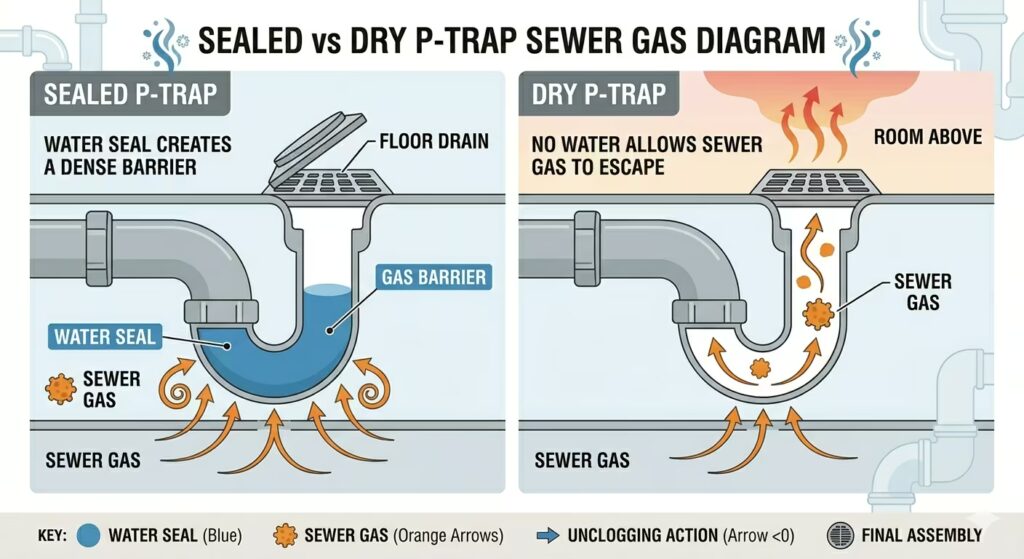
A basement floor drain that smells is almost always caused by a dry P-trap. This is the most common cause of a drain smell in any infrequently used drain in the house.
The P-trap is the curved section of pipe beneath every drain. It holds a small amount of water that acts as a seal, blocking sewer gases from traveling up through the drain and into the house.
When a drain is not used regularly, that water evaporates. The seal disappears, and sewer gas — which contains hydrogen sulfide and smells like rotten eggs — enters the room freely.
The fix
Pour two to three cups of water directly down the drain. This refills the P-trap and restores the gas seal. The smell should stop within minutes.
To prevent the P-trap from drying out again, pour water down the drain once a month. Adding a small amount of cooking oil after the water slows evaporation and extends the seal between uses.
| If pouring water does not stop the smell within 30 minutes |
|---|
| A persistent rotten-egg or sewage smell after refilling the P-trap may indicate a cracked or missing P-trap, a venting issue in the drain system, or a problem further down the sewer line. At that point, a plumber should inspect the drain. |
When Every Drain in the House Smells at Once
If the smell is coming from multiple drains simultaneously — the kitchen, bathroom, and basement — the cause is not a dirty drain. It is sewer gas entering the home through the plumbing system.
This is a more serious situation than a single smelly drain and warrants prompt attention.
Common causes of a whole-house drain smell
- Multiple dry P-traps in unused drains throughout the house
- A blocked or damaged plumbing vent pipe on the roof, causing negative pressure that sucks water out of P-traps
- A cracked sewer line is allowing gas to enter the drain system
- A failed wax ring seal at the base of a toilet
What to do
Start by pouring water into every floor drain, unused sink, and utility drain in the house to rule out multiple dry P-traps as the cause. If the smell clears after doing this, dry traps were the problem.
If the smell persists after refilling all traps, the issue is either a venting problem or a deeper problem with the sewer line. Both require a licensed plumber to diagnose and fix safely.
| RELATED: Main Sewer Line Clog — Signs, Causes, and What to Do |
|---|
| A smell from every drain, combined with slow drainage throughout the house, may indicate a problem with the main sewer line. Read our guide on identifying and addressing a sewer line blockage. |
What the Type of Smell Is Telling You
The specific character of the odour narrows down the cause before you even look at the drain.
| Smell Description | Most Likely Cause | Action |
| Musty or mouldy | Biofilm or organic buildup in the drain | Clean the stopper and drain, and flush with baking soda |
| Rotten eggs or sulphur | Dry P-trap or sewer gas | Refill the P-trap, check all drains |
| Sewage or faeces | Sewer gas from a dry trap or vent issue | Refill all traps, call a plumber if persistent |
| Fishy or ammonia-like | Bacterial growth in standing water or a drain | Clean the drain thoroughly, disinfect with vinegar |
| Garbage or rotting food | Food buildup in the kitchen drain or disposal | Clean disposal and drain, flush with hot water |
Smelly Kitchen Drain With a Garbage Disposal
If your kitchen has a garbage disposal and the drain smells, the disposal itself is almost always the source, not the drain pipe.
Food residue accumulates on the rubber splash guard inside the disposal opening and on the unit’s grinding components. This material decomposes, producing a persistent, food- or sewage-like smell.
How to clean a smelly garbage disposal
- Cut a lemon or lime into small pieces and feed them into the disposal while running cold water. The citric acid cuts through grease, and the scent masks residual odours.
- Pour 2 tablespoons of baking soda into the disposal, then add half a cup of white vinegar. Let it fizz for five minutes, then flush with cold water while running the disposal.
- Lift the rubber splash guard and scrub the underside thoroughly with a brush and dish soap. This is the single dirtiest component in most disposals and is almost always overlooked.
- Drop three or four ice cubes into the disposal and run it. The ice cleans the grinding components as it breaks up.
Keeping Drains Smelling Fresh Long Term
The most effective drain maintenance takes minutes a month and prevents smells from developing in the first place.
- Run hot water down the kitchen drains for 30 seconds after every use to flush grease through before it coats the pipe
- Empty and clean hair catchers in the shower and bathtub drains after every shower
- Pour water into rarely used floor drains and utility drains once a month to maintain the P-trap seal
- Clean bathroom sink drain stoppers monthly — remove, scrub, and replace
- Do a baking soda and vinegar flush in all drains once a month as a preventive deodoriser
- Never pour grease, oil, or coffee grounds down any drain
| RELATED: How to Unclog a Drain Without Chemicals |
|---|
| A slow drain is often the stage just before a smelly one. Clearing a partial clog early removes the decomposing material that produces odour. Read our guide on five chemical-free methods. |
Frequently Asked Questions
Why does my drain smell like rotten eggs?
A rotten egg smell from a drain is almost always hydrogen sulfide — the gas produced when organic matter decomposes in a wet, low-oxygen environment. In a single drain, it usually means biofilm buildup or a partially blocked pipe.
If the rotten egg smell comes from a floor drain or an infrequently used sink, a dry P-trap is the most likely cause. Pour water into the drain, and the smell should stop within minutes.
Why does my drain smell worse at night?
Drain odors are often more noticeable at night because household ventilation slows. Windows and fans that run during the day disperse odours that become more concentrated in still air overnight.
The smell itself is not worsening — the conditions that make you notice it are. Fixing the underlying cause will eliminate it regardless of the time of day.
I cleaned the drain, but it still smells. What now?
If a thorough cleaning of the drain stopper, hair clog, and a baking soda flush have not resolved the smell, the source is likely deeper in the pipe or in the P-trap itself.
Try a longer drain snake to reach further into the pipe. If the smell persists after that, particularly if it resembles sewage rather than organic matter, have a plumber inspect the vent pipe and P-trap for damage.
Is a smelly drain dangerous?
Most drain smells are caused by decomposing organic matter and are unpleasant but not dangerous. A rotten egg or sewage smell from multiple drains is a different matter.
Sewer gas contains hydrogen sulfide, which is toxic in high concentrations. A persistent sewage smell throughout the home, particularly in an enclosed space, warrants ventilation and a prompt plumber inspection rather than just a drain clean.
Can a smelly drain indicate a more serious plumbing problem?
In most cases, a smelly drain is a maintenance issue, not a structural one. The exception is when the smell is sewage-like, affects multiple drains at once, or returns quickly after cleaning.
Those patterns can indicate a venting problem, a cracked drain pipe, or a main sewer line issue — all of which need professional assessment.
Find the Drain, Fix the Smell — It Is Usually That Simple
Most drain smells trace back to a single, straightforward cause in a specific drain. A dirty stopper, a hair clog, or a dry P-trap accounts for most cases.
The fix for each is quick, requires no tools beyond a brush and a plastic hair removal tool, and costs nothing beyond a handful of baking soda and some vinegar.
When the smell is coming from everywhere at once or keeps returning after cleaning, that is when you call a plumber. Everything else you can handle yourself in under 20 minutes.